
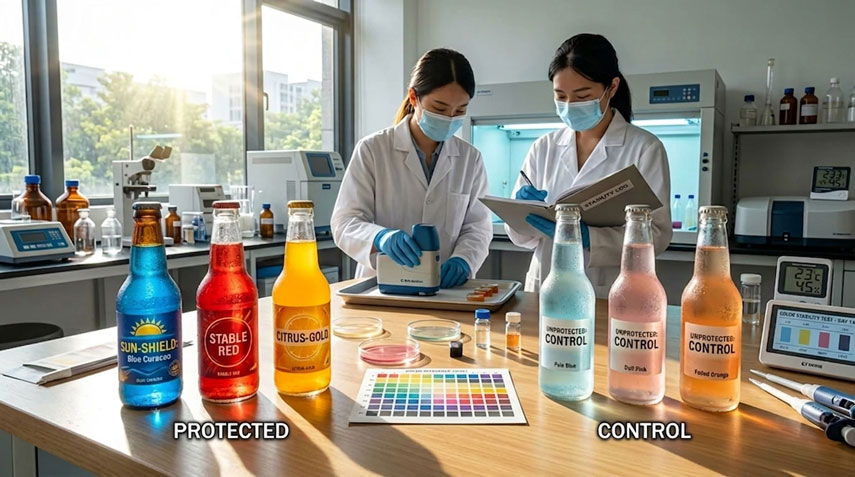
Battling Sun-Induced Fading: Strategies to Protect Synthetic Colors in Drinks for Lasting Vibrancy
In the competitive beverage market, visual appeal is the first handshake with the consumer. The brilliant ruby red of a cherry soda or the electric yellow of a lemon-lime energy drink is not just a color—it’s a promise of flavor, quality, and freshness. However, this vibrant promise is under constant attack from an invisible force: light. For beverage formulators and R&D managers, battling sun-induced fading is a critical, ongoing challenge, especially for products housed in the increasingly popular transparent PET or glass packaging. When a consumer sees a faded, less-than-vibrant product on the shelf, they don’t see the complex science of photodegradation; they see a product that looks old, off-flavor, or simply unappealing. This single moment of hesitation can lead to a lost sale and long-term damage to brand perception. Understanding and conquering this challenge is paramount to ensuring a product’s success from the production line to the shopping cart.
Key Takeaways
- The Core Problem: UV radiation from sunlight and artificial retail lighting is the primary cause of synthetic color degradation in beverages, breaking down the molecular structures (chromophores) that produce color.
- Costly Inefficiencies: The common industry practice of overdosing expensive synthetic colorants to compensate for fading is a costly, imprecise, and often ineffective strategy that can negatively impact the beverage’s sensory profile.
- The Advanced Solution: Imbevia’s Color Stabilizer technology acts as a molecular shield, absorbing harmful UV energy before it can damage the color molecules, thereby preserving the intended hue and vibrancy.
- Tangible ROI: Effectively stabilizing color enhances brand perception, significantly extends visual shelf life, and delivers a strong return on investment by enabling lower, more precise usage of costly artificial dyes.
- Formulation Imperative: For any beverage in transparent packaging, from CSDs to energy drinks, implementing a robust color stabilization strategy is no longer a luxury but a commercial necessity.
The Science of Color Degradation: Why Your Beverage is Fading
To effectively solve a problem, one must first understand its scientific root. The fading of synthetic colors in beverages is a chemical process known as photodegradation. At the heart of this issue are molecules called chromophores. These are the specific parts of a colorant’s molecular structure that absorb certain wavelengths of visible light and reflect others, which our eyes then perceive as color.
Synthetic food colorants like FD&C Red 40 (Allura Red), FD&C Yellow 5 (Tartrazine), FD&C Blue 1 (Brilliant Blue), and Carmoisine (Azorubine) are prized for their intensity and stability in a wide range of pH conditions.However, their complex chemical structures, particularly the double bonds within their chromophores, are highly susceptible to high-energy ultraviolet (UV) radiation.
When a beverage is exposed to sunlight or even the fluorescent lighting of a supermarket aisle, UV photons bombard these color molecules. This influx of energy can break the critical chemical bonds within the chromophores. Once this structure is broken or altered, the molecule loses its ability to absorb and reflect light in the same way, resulting in a visible loss of color, or fading. It is, in essence, a molecular-level sunburn that irreversibly damages your product’s visual identity.
Several factors can accelerate this degradation process:
- Oxygen: The presence of dissolved oxygen can create highly reactive free radicals when energized by UV light, leading to an even faster breakdown of color molecules.
- • Ingredients : Certain vitamins, such as ascorbic acid (Vitamin C), while excellent antioxidants in some contexts, can paradoxically act as pro-oxidants in the presence of light and certain metal ions, hastening color loss. In addition to vitamins, the presence of certain impurities and sulfide compounds also plays a significant role in the decolorization of the beverage.
- Packaging: Transparent packaging like clear PET or glass offers virtually no protection, allowing the full spectrum of damaging light to penetrate the beverage.
This scientific reality makes the task of battling sun-induced fading a primary concern for ensuring shelf-life stability and maintaining brand standards.
The Proactive Solution: Imbevia’s Advanced Color Stabilizer Technology
Traditional methods of mitigating color fade have been reactive rather than proactive. The most common strategy is simply “overdosing”—adding significantly more colorant to the formulation than is needed, with the hope that enough will survive by the time it reaches the consumer. This is a crude, expensive, and unreliable approach. It fails to address the root cause and can introduce subtle off-notes, impacting the carefully crafted organoleptic profile of the beverage.
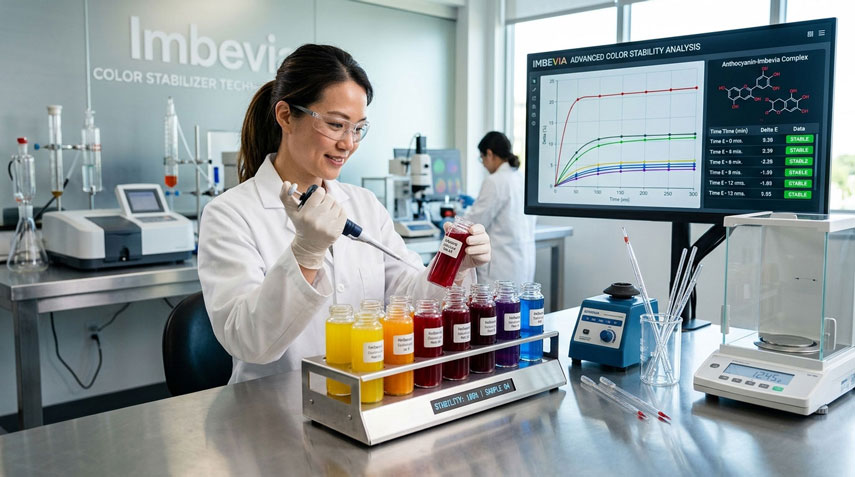
Imbevia offers a scientifically superior approach. Our Imbevia Color Stabilizer is not a commodity ingredient; it is a sophisticated, targeted technology engineered to protect the very essence of your beverage’s color.
So, how does it work?
Unlike a simple antioxidant, the Imbevia Color Stabilizer functions as a dedicated molecular bodyguard for your colorants. It works through a primary mechanism of competitive UV absorption. The molecules in our stabilizer are designed to be far more effective at absorbing the high-energy wavelengths of UV light than the color molecules themselves.
- Absorption: When UV light penetrates the beverage, the Imbevia Color Stabilizer preferentially absorbs the damaging photons.
- Protection: Color degradation often occurs through a series of destructive chain reactions. By absorbing the energy first and disrupting this chain of reactions, our stabilizer effectively shields the vulnerable chromophores of your synthetic colors from breakdown. The color remains vibrant and true because the agent of its destruction has been neutralized and the degradation process is halted.
This targeted intervention preserves the integrity of FD&C Red 40, Yellow 5, and other key synthetic dyes, ensuring your product looks as brilliant on day 90 as it did on day one. It is the definitive strategy for any brand serious about winning the battle against light degradation.
Beyond Vibrancy: The Commercial and Sensory Benefits of Color Stability
Implementing Imbevia Color Stabilizer into your formulation is not just a technical improvement; it’s a strategic business decision with a clear and compelling return on investment (ROI).
Enhanced Brand Perception and Consumer Trust
In a crowded retail environment, consumers make snap judgments. A vibrant, richly colored beverage communicates freshness, high quality, and premium value. A faded product, in contrast, triggers subconscious warnings of age, poor handling, or inferior ingredients. By ensuring color consistency, you are directly protecting your brand equity and fostering consumer trust, which is crucial for repeat purchases.
Extended Visual Shelf Life and Market Reach
Product returns from distributors due to faded appearance are a hidden cost that eats into profits. Our stabilizer extends the visual shelf life of your product, reducing these losses and giving you confidence in longer supply chains. This allows your brand to reach more distant markets and withstand the harsh lighting conditions of various retail settings—from sun-drenched convenience store windows to brightly lit cooler displays.
Significant Cost Savings and Formulation Efficiency
This is where the financial benefits become crystal clear. The practice of overdosing colorants by 20%, 30%, or even more than 50% to buffer against fading is a significant line item in your ingredient budget. By integrating Imbevia Color Stabilizer, you can eliminate the need for this guesswork. You can formulate with the precise, calculated amount of color needed to achieve your target hue. This reduction in the usage of expensive synthetic dyes translates directly into lower cost-of-goods-sold (COGS) and improved profitability on every unit produced.
Enhancing Safety and Preventing Toxic Byproducts
In addition to affecting the visual appeal of the product, the degradation of synthetic colors can lead to the formation of potentially carcinogenic compounds, posing significant health risks to consumers. Therefore, the use of color stabilizing preservatives is crucial not only for maintaining aesthetic quality but also for ensuring consumer safety.
Seamless Integration: Application and Technical Considerations
One of the core principles behind Imbevia’s technology is ease of implementation. We understand that any new ingredient must integrate seamlessly into existing production processes without causing disruption.
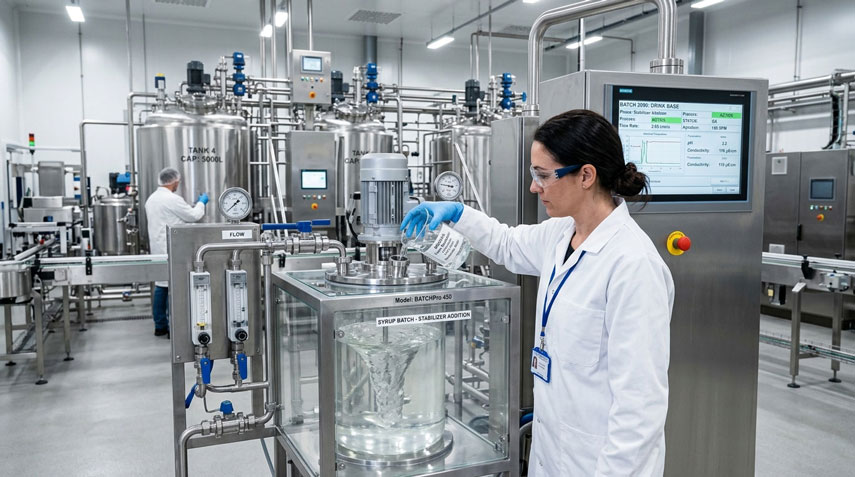
Imbevia Color Stabilizer is designed for maximum compatibility and simplicity. It is typically supplied as an easily dispersible liquid or water-soluble powder that can be added directly into the syrup or water phase during batching. Its low, cost-effective inclusion rates mean it has a minimal impact on the overall formulation matrix.
Our technology is proven effective across a vast array of beverage applications, including:
- Carbonated Soft Drinks (CSDs)
- Juice-Based and Dilutable Drinks
- Energy and Sports Drinks
- Ready-to-Drink (RTD) Teas and Coffees
- Enhanced and Flavored Waters
Our technical team works directly with your R&D department to recommend the optimal dosage based on your specific beverage base, color system, and packaging type, ensuring maximum efficacy and performance.
Conclusion: Win the Battle for Beverage Brilliance
The visual integrity of your beverage is non-negotiable. Fading color is a silent profit killer that erodes brand value, disappoints consumers, and complicates your supply chain. Continuing with outdated methods like color overdosing is an inefficient and costly gamble against the inevitable effects of light exposure.
Imbevia provides the definitive, science-backed solution. Our advanced Color Stabilizer is the strategic ingredient that empowers you to take control, ensuring your product’s vibrancy and quality from the moment it’s bottled to the moment it’s enjoyed. Stop reacting to fading and start proactively protecting your formulation.
Don’t let light degradation dictate your product’s success. Protect your formulation, delight your consumers, and enhance your bottom line. Contact the experts at imbevia.com today to request a technical data sheet or a complimentary sample for your next beverage innovation.
Frequently Asked Questions (FAQ)
1. Can Imbevia Color Stabilizer protect natural colors as well?
Natural colors have a more complex structure, and extending their stability requires different approaches compared to synthetic colors. Research has shown that in some cases, the use of these stabilizers can improve the color stability of natural colors in beverages; however, since this is not a general rule, we do not make a definitive claim.
But Imbevia is currently developing a product aimed at enhancing the stability of natural colors, which is in the final stages of testing and will be launched to the market soon.
2. Does the stabilizer affect the final taste or aroma of the beverage?
No. At the recommended dosage levels, Imbevia Color Stabilizer is engineered to be completely organoleptically neutral. It performs its protective function without imparting any detectable flavor, aftertaste, or aroma, ensuring the sensory profile you meticulously designed remains unaltered.
3. How does your color stabilizer compare to using UV-blocking packaging?
UV-blockingpackaging or opaque containers can be effective barriers against color degradation, but they can conceal your greatest marketing asset: the product itself. Consumers are naturally attracted to visually appealing beverages. Furthermore, some UV-blocking packages are completely clear and colorless, yet despite their effectiveness, they come with certain drawbacks. These include higher production costs and the common use of titanium dioxide nanoparticles in the packaging material. Since titanium dioxide nanoparticles do not naturally occur in the environment, their use in packaging—even if deemed safe for consumers—can pose long-term environmental concerns.
In contrast, our color stabilizer maintains the product’s vibrant appearance while avoiding these issues, providing a safer and more sustainable solution.