
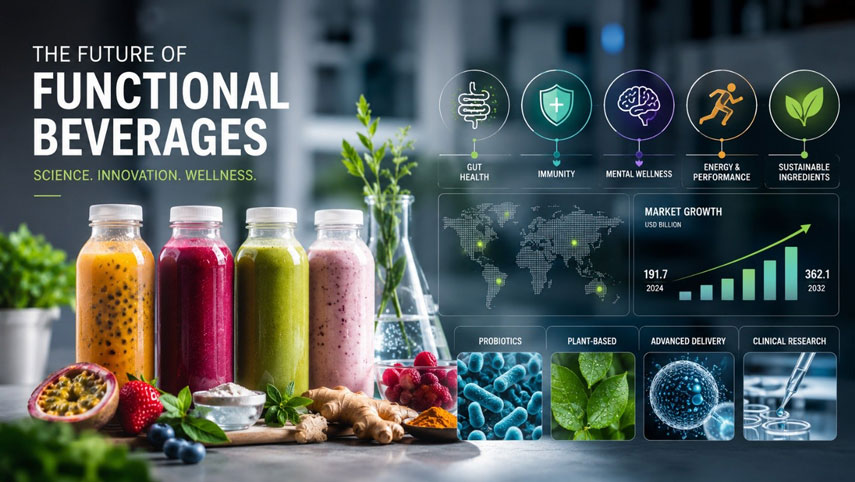
Functional Beverage Trends in 2025: What the Data Shows
Functional beverages have evolved far beyond traditional sports drinks and vitamin-fortified juices. Driven by growing consumer interest in preventive healthcare, healthy aging, gut health, immunity, and personalized nutrition, they have become one of the fastest-growing segments of the global food and beverage industry (3,4).
These beverages are generally defined as non-alcoholic formulations fortified with bioactive compounds derived from plant, animal, marine, or microbial sources intended to provide physiological effects substantiated by scientific evidence, distinct from basic nutritional value, and include probiotic beverages, sports and energy drinks, fermented beverages, fortified dairy products, and plant-based milk alternatives (1,2).
Unlike conventional beverages consumed primarily for hydration and sensory enjoyment, these products are formulated to support specific physiological functions. Subject to rigorous scientific validation, their composition and bioactivity may support outcomes such as modulation of gut microbiota, normal immune system function, antioxidant defense, and metabolic health (3).
Recent advances in food science, biotechnology, and ingredient delivery systems have improved product stability, bioavailability, and consumer acceptance (3,4).
Meanwhile, increasing demand for clean-label products, sustainable ingredients, and evidence-based formulations continues to drive innovation across the beverage industry. The COVID-19 pandemic further accelerated consumer demand for scientifically supported functional beverages (3,4).
This narrative review highlights recent advances in functional beverages, focusing on emerging bioactive ingredients, technological innovations, sustainability, personalized nutrition, and future challenges.
Key Functional Ingredients Driving Beverage Innovation
Plant-Derived Bioactive Compounds
Plant-derived bioactive compounds represent one of the most extensively investigated groups of functional ingredients used in beverage formulations. They are incorporated because of their reported antioxidant, anti-inflammatory, and other biological properties, although their effectiveness depends on the specific compound and the available experimental and clinical evidence.
Polyphenols: Polyphenols are abundant in fruits, vegetables, cereals, and tea and are widely incorporated into bioactive drinks. In fermented products such as kombucha, microbial activity can modify complex phenolic compounds, with the effect on bioavailability depending on strain, fermentation conditions, and beverage matrix factors that warrant further mechanistic characterization (11).
Flavonoids: Flavonoids are a major subclass of polyphenols that have been extensively investigated, primarily in in vitro and cell-based studies, for their antioxidant and anti-inflammatory properties. They are naturally present in green and black tea, quinoa, and buckwheat and, pending further clinical evidence of efficacy in humans, have been associated with cardiovascular and metabolic health benefits according to current evidence (7).
Anthocyanins: Anthocyanins are natural pigments responsible for the red, purple, and blue coloration of many fruits and vegetables. Current evidence suggests that they possess strong antioxidant activity and may contribute to the maintenance of cognitive function and protection against oxidative stress (9,12).
Curcumin: Curcumin is a polyphenolic compound derived from turmeric that has attracted considerable research interest because of its antioxidant and anti-inflammatory properties. However, its application in beverages is limited by poor aqueous solubility and low gastrointestinal bioavailability (4).
Nanoemulsion-based delivery systems are investigated for curcumin to enhance its aqueous solubility and potentially improve its oral absorption, contingent upon specific formulation parameters and in vivo validation (4).
Botanical Extracts: Botanical extracts obtained from medicinal plants, including ginger, lemongrass, hibiscus, and adaptogenic herbs, are increasingly incorporated into healthy beverages. Depending on their composition, these ingredients have been investigated for their potential roles in immune function, stress management, and sensory quality (3,4).
Although many plant bioactives show promising biological activities, their bioavailability and clinical efficacy are often limited. Future beverage development should focus on standardized ingredients and clinically validated formulations, rather than relying only on in vitro evidence.
Probiotics, Prebiotics, and Postbiotics
Modulation of the gut microbiota has become an important focus in functional beverage research. Probiotics, prebiotics, and postbiotics influence the intestinal ecosystem through different mechanisms and may contribute to gut health (1).
Probiotics: Probiotics are live microorganisms that provide health benefits when consumed in adequate amounts. The most frequently used strains belong to Lactobacillus and Bifidobacterium, although probiotic yeasts such as Saccharomyces cerevisiae var. boulardii are also being incorporated into beverage formulations.
Certain probiotic strains have been associated with gut microbial balance, intestinal barrier integrity, and immune regulation. These effects are strain-specific and depend on adequate viability, dosage, and regular consumption.
Probiotic cultures are used in yogurt, kefir, kombucha, fermented fruit beverages, and cereal-based drinks. Appropriate strain selection is important for maintaining product stability and functionality during storage.
Prebiotics: Prebiotics are non-digestible carbohydrates that selectively stimulate beneficial intestinal microorganisms. Common ingredients include inulin, fructo-oligosaccharides (FOS), galacto-oligosaccharides (GOS), and β-glucans.
These compounds serve as fermentable substrates for probiotic microorganisms. Their incorporation may improve the survival of selected probiotic strains and enhance the functionality of synbiotic beverages (1).
Postbiotics: Postbiotics include non-viable microbial cells, cell components, and metabolites produced during fermentation. Representative compounds include short-chain fatty acids (SCFAs), peptides, enzymes, and exopolysaccharides.
Unlike probiotics, postbiotics do not require viable microorganisms to exert biological effects. As non-viable microbial products or metabolic byproducts, they may offer advantages in formulation stability and processing tolerance compared with live probiotics, though specific stability profiles remain dependent on the exact composition and storage conditions.
Preliminary evidence indicates that specific postbiotics may contribute to intestinal barrier integrity, modulate immune responses, and influence inflammatory pathways, necessitating further human clinical trials for definitive substantiation (10).
Synergy and Future Directions: Well-designed synbiotic formulations, in which probiotic strains are compatible with the prebiotic substrate and beverage matrix conditions, have the potential to enhance probiotic survival and metabolic activity by simultaneously supplying beneficial microorganisms and fermentable substrates.
Recent commercial products also reflect this trend. For example, Slice introduced a ready-to-drink functional beverage formulated with prebiotics, probiotics, postbiotics, and coconut-derived MCT oil, illustrating the industry’s shift toward multifunctional microbiome-targeted beverage formulations.
Precision probiotics and personalized nutrition are promising approaches for future functional beverages. However, their successful application depends on clinically validated strains and robust human evidence rather than increasingly complex formulations (10).
Proteins, Peptides, Vitamins, and Minerals Used in Functional Beverage Fortification
Proteins, peptides, vitamins, and minerals are widely incorporated into functional beverages to enhance their nutritional profile. These ingredients are obtained from dairy products, pseudocereals, legumes, and various plant-derived sources.
Proteins: Proteins are key ingredients in both dairy- and plant-based functional beverages. Whey proteins are widely used because of their high digestibility and branched-chain amino acid (BCAA) content.
Current evidence suggests that BCAAs may contribute to muscle protein synthesis, post-exercise recovery, and physical performance. Consequently, whey proteins are widely used in sports nutrition beverages (1,7).
Plant-derived proteins from quinoa, buckwheat, and amaranth provide alternative protein sources with balanced amino acid profiles. These pseudocereals are particularly valued because they contain essential amino acids, including lysine, which is often limited in conventional cereals.
Recent product launches reflect the growing demand for protein-enriched functional beverages. For example, Beyond Meat has introduced Beyond Immerse, a sparkling beverage containing plant protein, dietary fiber, vitamins, and electrolytes.
Bioactive Peptides: Bioactive peptides are short amino acid sequences released during food processing or gastrointestinal digestion. They have been investigated for antioxidant, antihypertensive, immunomodulatory, and metabolic activities.
Milk-derived peptides may inhibit angiotensin-converting enzyme (ACE), suggesting a potential role in cardiovascular health. Other peptides are also being investigated for their anti-inflammatory and metabolic effects, although additional clinical evidence is required (1,7,13).
Vitamins: Vitamins are commonly incorporated into Health-focused beverages to improve their nutritional profile. B-complex vitamins participate in energy metabolism, whereas vitamins C and E contribute to antioxidant defense by reducing oxidative stress.
Vitamin D is frequently added to dairy and fortified beverages because of its role in calcium metabolism and bone health. The effectiveness of vitamin fortification depends on formulation stability and bioavailability.
Minerals: These micronutrients support hydration, muscle function, and metabolic regulation, and are widely incorporated into Health-focused beverages. Electrolytes such as sodium, potassium, and magnesium help maintain fluid balance, particularly in sports beverages (1,2,6).
Calcium and phosphorus contribute to bone health, whereas iron and zinc are involved in normal immune function.
Optimizing mineral fortification, however, requires careful consideration of solubility, potential precipitation, interactions with other ingredients such as proteins and polyphenols, and undesirable metallic or chalky off-flavors, alongside applicable regulatory limits.
Technological approaches such as nanoemulsions and microencapsulation are increasingly used to improve ingredient stability in functional beverages. These technologies may protect sensitive vitamins from degradation while improving the stability and bioavailability of selected minerals and proteins in complex beverage systems.
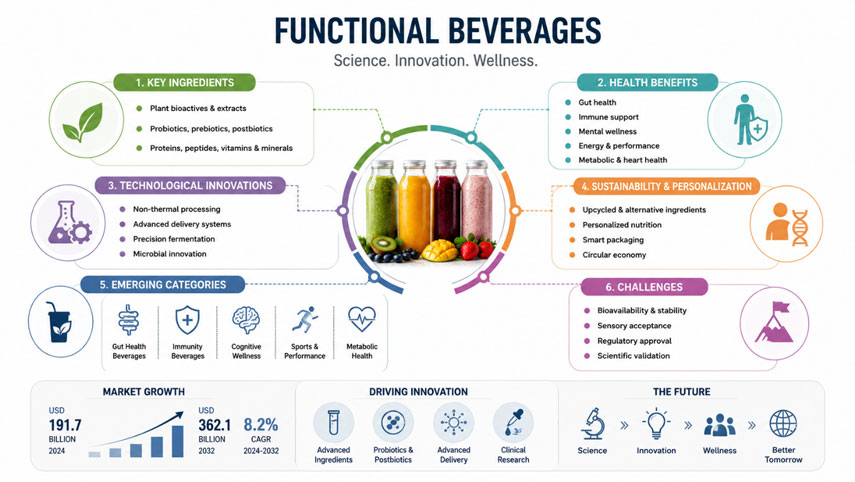
Technological Innovations Transforming Functional Beverage Development
Technological innovation has become a major driver of functional beverage development. Advances in food engineering, biotechnology, and targeted delivery systems have facilitated the development of functional beverages with improved stability, bioavailability, and functional performance (5).
Advanced Non-Thermal Processing Technologies
Driven by demand for clean-label products, non-thermal technologies such as HPP, PEF, ultrasound, and cold plasma are increasingly explored for microbial inactivation. Their efficacy is process-parameter dependent, with impacts on product chemistry and sensory quality requiring specific evaluation (3,6).
High-Pressure Processing (HPP): HPP applies hydrostatic pressures between 300 and 600 MPa to reduce foodborne microorganisms, including Escherichia coli and Listeria species. Compared with conventional thermal processing, HPP may better preserve heat-sensitive bioactive compounds while extending product shelf life (6).
Pulsed Electric Fields (PEF): PEF uses short pulses of high-voltage electricity to disrupt microbial cell membranes. This technology may reduce microbial spoilage while preserving flavor, color, and heat-sensitive vitamins more effectively than conventional pasteurization (6).
Ultrasonication (US): Ultrasonication generates cavitation through high-frequency sound waves, facilitating ingredient dispersion and the extraction of plant-derived bioactive compounds. Current studies suggest that this technology may improve processing efficiency and beverage quality (6).
Cold Plasma Processing (CPP): Cold plasma employs ionized gases to reduce microbial populations with minimal heat generation. Emerging evidence suggests that it may also influence the properties of selected bioactive compounds, although further research is required (3).
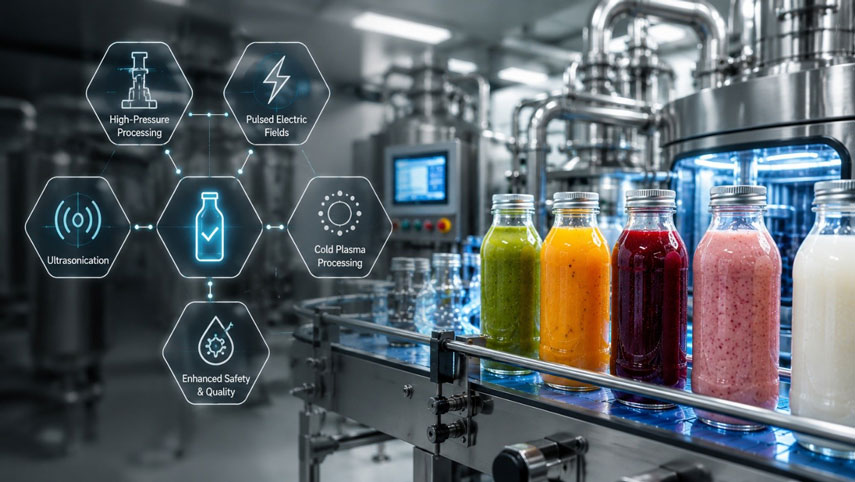
While non-thermal technologies may more effectively preserve bioactive compounds than conventional processing, their industrial implementation remains contingent upon scalability, cost, and regulatory approval. Therefore, commercial feasibility is as significant as technological performance.
Advanced Bioactive Delivery Systems
Many bioactive compounds, including curcumin and polyphenols, exhibit poor water solubility, limited stability, and low bioavailability. Advanced delivery systems are being developed to protect these compounds during processing and digestion and may improve their functional performance (4).
Nanoemulsions: Characterized by small droplet sizes (typically 50–200 nm), nanoemulsions are utilized in delivery systems; their potential to enhance intestinal absorption of encapsulated bioactives is subject to formulation specifics, such as emulsifier type and stability, and requires empirical validation (7).
Microencapsulation: Protective biopolymer matrices, including alginate and chitosan, are used to shield sensitive compounds from oxygen, light, and temperature fluctuations and to enable controlled release within the gastrointestinal tract; however, the degree of protection is contingent upon the integrity of the encapsulation matrix and the specific storage and processing conditions (4,7).
Liposomal Carriers: Phospholipid-based vesicles can encapsulate both hydrophilic and lipophilic compounds, making them versatile delivery systems for functional beverages. Their structural properties may improve the stability and delivery of sensitive bioactive compounds (4).
Hydrogels: Hydrogels are polysaccharide–protein networks designed to regulate the release of encapsulated compounds. They are being investigated as delivery systems for vitamins, polyphenols, and other bioactive ingredients used in next-generation beverages (8).
Although advanced delivery systems improve the stability and bioavailability of bioactive compounds, enhanced bioavailability does not necessarily translate into improved clinical outcomes. Further human intervention studies are needed to confirm their long-term health benefits.
Precision Microbiology and Fermentation
Modern fermentation technologies have evolved from traditional spontaneous processes to controlled biotechnology-based systems. Advances in microbial selection and fermentation monitoring may improve production consistency and optimize the generation of desirable metabolites (5,9,10).
Precision Fermentation: Precision fermentation enables the controlled production of selected metabolites and functional ingredients using defined microbial strains. This approach may improve product consistency and facilitate the incorporation of bioactive compounds into beverage formulations (5,9).
The commercial application of precision fermentation is also expanding within the functional beverage industry. For example, MycoTechnology has developed Zukora, a honey truffle-derived sweet protein produced through precision fermentation for beverage applications. The ingredient enables howhile minimizing the bitter aftertaste associated with conventional high-intensity sweeteners.
Despite their considerable potential, precision microbiology approaches require stronger clinical validation and standardized regulatory frameworks before widespread commercialization in functional beverages.
Custom Starter Cultures: Defined bacterial and yeast cultures are increasingly being developed for fermented beverages such as kombucha. These customized microbial communities may improve fermentation reproducibility while reducing undesirable by-products, including excessive alcohol formation and biogenic amine production (9,10).
Next-Generation Probiotics and Psychobiotics: Next-generation probiotics are being investigated for physiological functions beyond traditional gastrointestinal health applications. Psychobiotics represent an emerging subgroup that may influence the gut–brain axis and are currently being explored for their potential roles in supporting mood regulation and cognitive function (10).
Sustainable and Personalized Nutrition
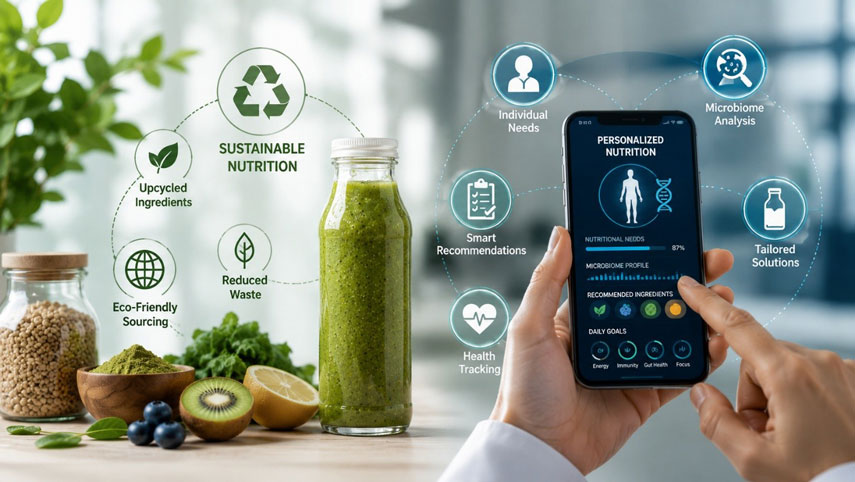
Sustainability and personalized nutrition have emerged as complementary directions in functional beverage innovation. Circular economy strategies emphasize resource efficiency, whereas advances in digital health technologies support the development of more individualized nutritional solutions. Together, these trends reflect the increasing focus on environmentally responsible and consumer-centered beverage development (2,4,6).
Upcycling of Food By-products
The valorization of food-processing by-products has been increasingly investigated as a sustainable strategy for beverage development. Dairy-derived ingredients such as whey provide proteins, branched-chain amino acids (BCAAs), and bioactive peptides that may enhance the nutritional profile of beverage formulations (4).
Fruit-processing residues, including banana peels and coffee pulp, have also been explored as potential sources of dietary fiber, polyphenols, and other bioactive compounds. Their successful incorporation, however, depends on processing technologies, formulation compatibility, sensory acceptance, and regulatory compliance (4).
Commercial initiatives play a significant role in advancing the circular bioeconomy. For example, Yeastup utilizes brewer’s spent yeast to produce high-value proteins and dietary fibers for food applications, demonstrating the commercial feasibility of ingredient upcycling.
Alternative Substrates
Plant-based substrates, particularly pseudocereals such as quinoa, buckwheat, and amaranth, have been widely explored as nutrient-rich ingredients for beverage production. These materials may provide proteins, dietary fiber, essential minerals, and phytochemicals while supporting plant-based or gluten-free beverage formulations (6).
Recent advancements in sustainable ingredient innovation have expanded into beverage applications. Solar Foods has introduced a ready-to-drink beverage containing Solein®, a protein generated from carbon dioxide, hydrogen, and renewable electricity via fermentation. This development illustrates the potential for climate-independent protein production.
Their commercial application nevertheless requires careful consideration of processing characteristics, nutrient stability, sensory properties, and consumer acceptance to ensure product quality and market feasibility.
Personalized Functional Beverages
Recent advances in artificial intelligence (AI), Internet of Things (IoT) technologies, digital health platforms, and microbiome research have expanded opportunities for personalized beverage development. These technologies may facilitate product design based on individual nutritional requirements, metabolic characteristics, and health objectives (2,4).
The current level of implementation, however, varies according to technological maturity, scientific validation, regulatory requirements, data availability, and privacy considerations. These factors remain important challenges for large-scale commercial adoption.
Smart Packaging Technologies
Smart packaging systems incorporating sensors, RFID technologies, and digital traceability tools are being developed to monitor product freshness, temperature fluctuations, and potential contamination throughout the supply chain. These technologies may support quality monitoring and product traceability during storage and distribution (6).
Their broader contribution to supply-chain transparency and consumer confidence depends on implementation costs, infrastructure availability, sensor reliability, regulatory acceptance, and industry adoption across different markets.
Emerging Functional Beverage Categories and Health Applications
The functional beverage market is increasingly shifting from general wellness toward products designed to address specific nutritional and health needs. Advances in nutrition science and growing consumer interest in personalized health have supported the development of beverages designed to support digestive, immune, cognitive, and metabolic functions (2,3,6).
Gut Health Beverages
Gut health continues to be an important area of functional beverage research, largely driven by expanding knowledge of the gut microbiome. Current formulations commonly incorporate probiotics such as Lactobacillus, Bifidobacterium, and Saccharomyces cerevisiae var. boulardii, together with prebiotics including inulin and fructooligosaccharides (FOS), to support the growth of beneficial gut microorganisms (2,5,6).
Postbiotics have also attracted increasing research interest because they may provide health-related benefits while offering greater stability during processing and storage. In parallel, traditional fermented beverages such as kombucha, kefir, and yogurt drinks continue to be investigated using novel starter cultures, ingredients, and fermentation technologies (2,5,6).
Immunity-Focused Beverages
Functional beverages formulated to support immune health continue to receive considerable attention from both consumers and researchers, particularly within the broader context of preventive nutrition. These products frequently contain polyphenols, flavonoids, curcuminoids, and botanical extracts such as turmeric, ginger, lemongrass, and elderberry (3,6,7).
Many formulations also include micronutrients such as vitamins C, D, and E, together with minerals including zinc and iron, which have established physiological roles in normal immune function. The selection of these ingredients generally depends on the intended formulation objectives and applicable regulatory requirements (3,6,7).
Cognitive and Mental Wellness Beverages
Growing interest in the gut–brain axis has contributed to increased research on innovative beverage formulations targeting cognitive performance and emotional well-being.
Formulations may include psychobiotics and adaptogenic herbs such as ashwagandha, rhodiola, and ginseng, studied for their potential role in stress modulation, attention, and mood regulation, with efficacy dependent on extract standardization and study population (2,3).
Other ingredients, including docosahexaenoic acid (DHA) and phosphatidylserine, have also been incorporated into beverages designed to support healthy cognitive aging. However, the clinical evidence supporting individual ingredients varies, and further human studies are needed to confirm their effectiveness in beverage applications (2,3).
Sports and Metabolic Health Beverages
Sports and metabolic health beverages are increasingly incorporating nutritional strategies that support individualized product formulation. Many products contain branched-chain amino acids (BCAAs), high-quality proteins, and electrolytes to support hydration, post-exercise recovery, and exercise performance (3,7).
Additional ingredients, including phytosterols and dietary fiber, have been explored for their potential contributions to cardiovascular and metabolic health. Emerging digital technologies and artificial intelligence (AI) may further facilitate the development of personalized beverage formulations, although their commercial implementation remains at an early stage (3,7).
Challenges and Future Perspectives
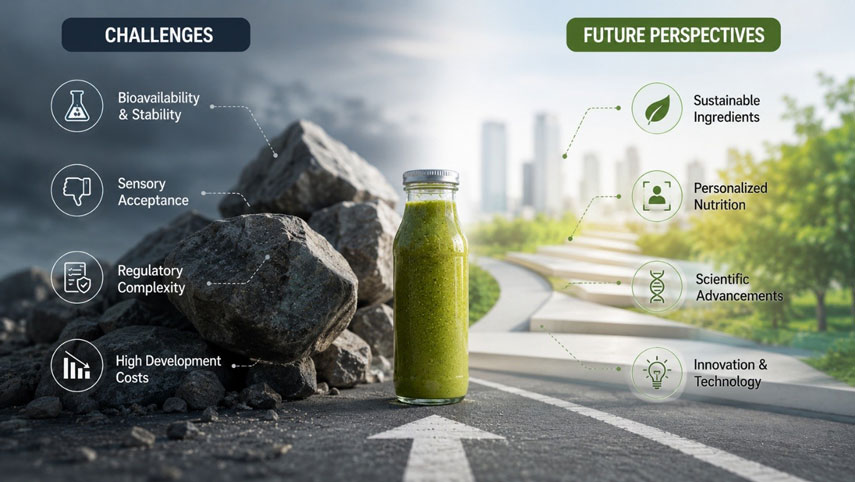
The functional beverage sector continues to evolve through advances in nutrition science, food technology, and consumer health research. Despite this progress, several scientific, technological, sensory, and regulatory challenges remain before many emerging functional beverage concepts can be translated into commercial applications.
Bioavailability and Stability Limitations
Many bioactive compounds, including polyphenols, flavonoids, and curcuminoids, are chemically unstable and may degrade during processing, storage, or gastrointestinal digestion. Maintaining their stability throughout processing, storage, and gastrointestinal digestion therefore remains an important formulation challenge.
Limited bioavailability further restricts the effectiveness of several functional ingredients. For example, curcumin exhibits poor aqueous solubility, limited intestinal absorption, and rapid metabolism, resulting in relatively low systemic availability.
Encapsulation technologies, including nanoencapsulation, have been investigated to improve ingredient protection and controlled release. However, achieving consistent bioavailability, large-scale manufacturing, and regulatory acceptance remains challenging.
Similarly, maintaining the viability of probiotic microorganisms during manufacturing, storage, and gastrointestinal transit is important for maintaining their intended functionality. Environmental stressors such as temperature, oxygen exposure, and acidity may reduce microbial survival and consequently influence product efficacy (3,7).
These issues should not be viewed as isolated technical obstacles; rather, they represent fundamental limitations that shape what can realistically be claimed about a product’s health effects.
Sensory Acceptance
Sensory characteristics, including taste, aroma, color, and texture, play a critical role in consumer acceptance of functional beverages. Products with poor sensory quality are generally less acceptable to consumers, regardless of their potential health benefits.
Certain bioactive ingredients, including minerals, amino acids, and plant-derived extracts, may introduce bitterness, metallic notes, or undesirable flavors. Consequently, formulation strategies should seek to balance the incorporation of functional ingredients with acceptable sensory quality while maintaining nutritional value and product stability (3,4,11).
Regulatory Challenges
Regulatory frameworks governing functional beverages differ considerably across countries, resulting in variations in product definitions, labeling requirements, and the approval of health claims. These differences may complicate product development and commercialization in international markets.
Many functional ingredients and beverages, including kombucha, currently have limited or no officially authorized health claims. Generating such evidence often requires extensive human intervention studies, increasing both development costs and time to market.
Emerging delivery technologies, including nanoencapsulation, may also require additional safety assessment before commercialization. Regulatory authorities increasingly emphasize comprehensive physicochemical characterization, toxicological evaluation, and long-term safety data for novel delivery systems (4,7,9).
Future Perspectives on Personalized Nutrition
Personalized nutrition is likely to remain an important area of research and innovation in the functional beverage sector. Future beverage development is likely to place greater emphasis on integrating nutrition science with digital technologies to better address individual physiological and metabolic variability.
Advances in artificial intelligence (AI), Internet of Things (IoT) technologies, wearable devices, and microbiome research may support more data-informed beverage formulation and individualized nutritional recommendations. However, successful implementation will depend on scientific validation, data quality, regulatory oversight, data privacy, and consumer acceptance.
Further progress is also expected through advances in nutrigenomics, systems biology, and digital health technologies. Nevertheless, additional clinical evidence, standardized methodologies, and multidisciplinary collaboration will be required before personalized functional beverages can be adopted on a broader commercial scale (3,4,11).
Conclusion
Functional beverages continue to evolve through advances in nutrition science, food technology, and ingredient innovation. Current research highlights growing opportunities in areas such as gut health, immune support, cognitive wellness, sustainability, and personalized nutrition.
At the same time, challenges related to bioavailability, sensory acceptance, regulatory compliance, and scientific validation remain important considerations for future product development. Addressing these issues will require continued collaboration between researchers, industry, and regulatory authorities.
Overall, Wellness beverages represent a rapidly evolving field with considerable potential. Future progress will depend on generating robust clinical evidence and developing scientifically validated products that meet both consumer needs and regulatory expectations.
Frequently Asked Questions (FAQs)
1. Why do promising functional ingredients not always produce the expected health benefits?
The effectiveness of functional ingredients depends not only on their biological activity but also on their stability, bioavailability, and interactions within the food matrix. These factors may influence their performance in finished beverage products.
2. Why are approved health claims limited for many functional beverages?
Most regulatory authorities require strong clinical evidence before approving health claims. For many functional beverages, additional human studies are still needed to support specific health-related claims.
3. What is the biggest challenge in developing personalized functional beverages?
Personalized beverages require reliable health data, scientific validation, and appropriate regulatory oversight. Their broader application will depend on advances in digital health technologies and clinical research.
4. Can sustainable ingredients maintain both nutritional quality and consumer acceptance?
They can, but successful application depends on ingredient selection, processing methods, product formulation, and sensory quality. Achieving this balance remains an important challenge for manufacturers.
5. What is likely to drive future innovation in functional beverages?
Future innovation is expected to focus on sustainable ingredients, improved delivery systems, personalized nutrition, and stronger clinical evidence to support product development and health claims.
References
1. Panou A, Karabagias IK. Composition, Properties, and Beneficial Effects of Functional Beverages on Human Health. Beverages. 2025;11(2):40. doi:10.3390/beverages11020040.
2. Vajdovich DK, Csobod É, Benedek C. Pseudocereal-Based Functional Beverages: Main Properties and Nutritional Evaluation with an Emphasis on Amino Acid Content: A Review. Foods. 2025;14(12):2080. doi:10.3390/foods14122080.
3. Alalwan TA. Consumer Psychology in Functional Beverages: From Nutritional Awareness to Habit Formation. Beverages. 2025;11(5):126. doi:10.3390/beverages11050126.
4. Munarso SJ, Elmatsani HM, Djafar MJ, Kailaku SI, Lukas A, Susetyo EB, et al. Global Trends and Innovations in Anti-Inflammatory Functional Beverages: A Bibliometric and Consumer Insights Analysis (2006–2025). Beverages. 2026;12(1):7. doi:10.3390/beverages12010007.
5. Abdul Manan M. Progress in Probiotic Science: Prospects of Functional Probiotic-Based Foods and Beverages. Int J Food Sci. 2025; 2025:5567567. doi:10.1155/ijfo/5567567.
6. Patria D, Bernas C, Lin J. Innovations Driving the Future of Beverage Industry. In: IntechOpen; 2025. doi:10.5772/intechopen.1012478.
7. Butt M, Hayat S, Riaz R, Khan M, Khalid B, Ye X, et al. Advances in Plant-Based Functional Foods: Emerging Trends, Nutritional Potential, and Health Implications. Food Sci Agric Med Rev. 2026;5(1):1-17. doi:10.61363/fsamr. v5i1.332.
8. Liu K, Chen YY, Zha XQ, Li QM, Pan LH, Luo JP. Research Progress on Polysaccharide/Protein Hydrogels: Preparation Methods, Functional Properties, and Applications as Delivery Systems for Bioactive Ingredients. Food Res Int. 2021;147:110542. doi:10.1016/j.foodres.2021.110542.
9. Pereira AG. Kombucha as a Bioactive Functional Beverage: Current Evidence, Production Challenges, and Future Perspectives. Int J Mol Sci. 2026;27(6):2739. doi:10.3390/ijms27062739.
10. Praveen M, Brogi S. Microbial Fermentation in Food and Beverage Industries: Innovations, Challenges, and Opportunities. Foods. 2025;14(1):114. doi:10.3390/foods14010114.
11. Del Rio D, Rodriguez-Mateos A, Spencer JPE, Tognolini M, Borges G, Crozier A. Dietary (Poly)phenolics in Human Health: Structures, Bioavailability, and Evidence of Protective Effects Against Chronic Diseases. Antioxid Redox Signal. 2013;18(14):1818-1892. doi:10.1089/ars.2012.4581.
12. Yeh TS, Yuan C, Ascherio A, Rosner BA, Willett WC, Blacker D. Long-term Dietary Flavonoid Intake and Subjective Cognitive Decline in US Men and Women. Neurology. 2021;97(10):e1041-e1056. doi:10.1212/WNL.0000000000012454.
13. Mirzakulova A, Sarsembaeva T, Suleimenova Z, Kowalski Ł, Gajdzik B, Wolniak R, et al. Whey: Composition, Processing, Application, and Prospects in Functional and Nutritional Beverages—A Review. Foods. 2025;14(18):3245. doi:10.3390/foods14183245.