
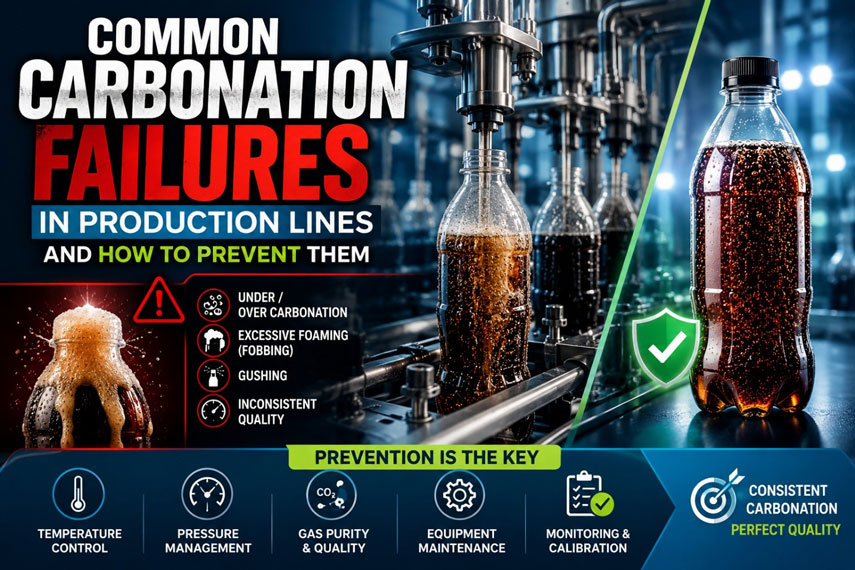
Common Carbonation Failures in Production Lines and How to Prevent Them
Carbonation represents a critical quality attribute in carbonated beverages because it directly influences consumer perception, product stability, and manufacturing efficiency. Although carbonation is important in several beverage categories, this review primarily focuses on carbonated soft drinks (CSDs). Other carbonated beverages are mentioned only where relevant for comparison. In carbonated soft drinks, dissolved carbon dioxide (CO₂) contributes to effervescence, mouthfeel, aroma release, and the refreshing sensation consumers expect. In addition to its sensory role, dissolved CO₂ may contribute to the microbiological stability of some carbonated beverages by slightly lowering the pH through the formation of carbonic acid. However, its antimicrobial effect depends on beverage formulation and should not be considered a primary preservation mechanism (1,17). Acidic carbonated beverages may still support the growth of acid-tolerant spoilage microorganisms, including certain yeasts, molds, and bacteria.
Maintaining the target dissolved CO₂ concentration remains a major challenge in high-speed beverage production. Small deviations can result in under-carbonation, over-carbonation, excessive foaming, or gushing, leading to product losses and reduced process efficiency (2,3). Common contributing factors include inadequate equipment maintenance, poor temperature or pressure control, inaccurate instrumentation, insufficient process standardization, and packaging integrity failures (2). Effective carbonation management therefore requires an understanding of CO₂ dissolution together with accurate control of temperature, pressure, and filling conditions to achieve consistent product quality during production and storage (3,4).
1. Scope and Approach
This article is a technical review based on published scientific literature, engineering references, and technical books related to beverage carbonation. It does not present original experimental data but summarizes current knowledge on carbonation failures, their causes, and prevention strategies. Unless otherwise stated, the operational ranges discussed are representative values reported in the literature and should be interpreted as illustrative rather than universal production specifications.
2. Understanding the Carbonation Process
2.1. What Is Carbonation?
Carbonation is the process of dissolving carbon dioxide (CO₂) gas in a liquid to produce effervescence. Throughout this article, the primary metric used to describe carbonation is dissolved CO₂ concentration. Depending on industry practice, dissolved CO₂ concentration may be reported as volumes of CO₂ (v/v) or grams of CO₂ per liter (g/L). Beverage temperature and operating pressure are discussed as process variables that influence dissolved CO₂ concentration rather than as direct measures of carbonation. In the beverage industry, this is a tightly controlled operation where CO₂ is saturated into the product under specific temperature and pressure conditions to achieve the desired “fizz” or mouthfeel.
Mechanism: The process relies on reaching equilibrium between the gas phase in the container’s headspace and the dissolved gas in the liquid. Henry’s Law usually explains how CO₂ dissolves, stating that the amount of dissolved CO₂ depends on its partial pressure in the gas phase. However, in beverages, factors such as temperature, beverage composition (including sugars, acids, ethanol, and dissolved solids), ionic strength, and whether the gas and liquid phases have reached equilibrium also influence CO₂ solubility. Therefore, carbonation in industrial production cannot be predicted based on pressure alone. Whenever pressure values are reported, they should clearly indicate whether they refer to absolute or gauge pressure (3,5). Once packaged, the CO₂ stays in solution until the pressure is released (opening the bottle), which triggers heterogeneous nucleation, the formation of bubbles at catalytic sites such as the container walls or particles within the liquid (3).
2.2. Key Factors Affecting Carbonation
Carbonation behavior varies significantly among beverage categories. Carbonated soft drinks, sparkling waters, beer, and sparkling wines differ in chemical composition and packaging, which influence CO₂ solubility, foam characteristics, internal pressure, and carbonation retention during production and storage. This discussion will focus on carbonated soft drinks unless otherwise noted, with comparisons to other beverages included only when relevant.
Several critical variables influence the efficiency and stability of the carbonation process:
Temperature: Temperature is critical, as lower beverage temperatures increase CO₂ solubility and reduce foaming during filling. In carbonated soft drink production, filling is commonly performed at approximately 0–4°C to reduce CO₂ loss during filling. However, the appropriate filling temperature depends on the beverage formulation, the target dissolved CO₂ concentration, the filling equipment, and the production conditions. Higher temperatures decrease CO₂ solubility, increase gas breakout during filling, and may raise package pressure during storage (3,15).+
Pressure: Pressure requirements vary with the target, beverage temperature, package geometry, and production conditions. As a result, operating pressures differ between beverage types and filling systems. Reported pressure values should clearly specify whether they refer to gauge or absolute pressure, and carbonation should be verified using validated carbonation charts or analytical measurement methods (15).
CO₂ Purity: Beverage-grade CO₂ is essential to maintain product quality and should comply with established purity specifications to minimize contaminants that may affect flavor, aroma, or product stability. Potential nucleation sites are more commonly associated with suspended particles, surface irregularities, or equipment-related contamination than with the CO₂ itself. Therefore, both gas quality control and effective equipment sanitation are important for consistent carbonation performance (2,3).
Beverage Composition: Surface-active and foam-stabilizing components are essential in determining bubble dynamics and overall foam stability. In beverages such as beer, proteins and hop-derived compounds serve as the main contributors to foam stability, whereas sugars primarily affect the beverage’s physical properties and do not act as surface-active agents. As a result, drinks with low levels of surface-active ingredients, like carbonated water, usually have less stable foam and bubbles that do not last as long. The way bubbles behave also depends on minerals, suspended particles, and places where bubbles can form.
Residence Time and Agitation: Adequate contact time is necessary for the gas to dissolve completely and achieve equilibrium with the liquid. Controlled agitation facilitates this transfer. However, excessive turbulence or rapid transfers should be avoided because they may result in CO₂ loss through foaming or gas escape prior to container sealing.
Equipment Design: The configuration of the production line, particularly the carbonators, deaerators, and filling valve, determines the consistency of the CO₂ dosage. Contemporary production lines employ advanced instrumentation, including Coriolis flow meters and smart positioners, to minimize dissolved CO₂ Drift, which frequently results from worn seals or sensor inaccuracies. Additionally, system design must consider the gas permeability of materials and the integrity of seals to ensure carbonation is maintained throughout the product’s shelf life (15).
Table 1. Typical Operating Conditions for Common Carbonated Beverages
| Beverage category | Target dissolved CO₂ concentration | Beverage temperature | Pressure basis | Package type | Analytical method |
| Carbonated soft drinks | 5.5–8.0 g/L | 0–4°C | Operating pressure (gauge) | PET, Glass, Can | Zahm & Nagel or Anton Paar CO₂ analyzer |
| Sparkling water | 6.0–8.5 g/L | 0–4°C | Operating pressure (gauge) | PET, Glass | Dissolved CO₂ analyzer |
| Beer | 4.0–5.5 g/L | 0–2°C | Operating pressure (gauge) | Bottle, Can | CO₂ volume measurement |
| Sparkling wine | 8.0–12.0 g/L | 4–8°C | Bottle pressure | Glass bottle | Pressure, temperature method |
3. Common Carbonation Failures in Production Lines
3.1. Under-Carbonation
Under-carbonation represents a primary technical failure in which the dissolved carbon dioxide content in the beverage does not meet established technical specifications. This defect frequently results in production quarantines and may necessitate the rejection or reworking of entire batches (15).
Symptoms:
“Flat” Mouthfeel: The first thing you notice is that the usual tingling or bite from dissolved CO₂ is missing. This feeling mainly comes from the formation of carbonic acid and the stimulation of trigeminal sensory receptors, not just from bubbles (5).
Reduced Effervescence: A visible decrease in bubble formation may indicate carbonation loss; however, bubble formation is also influenced by factors such as temperature, pouring technique, surface characteristics, suspended particles, and nucleation sites. Therefore, confirmation of dissolved CO₂ levels should be conducted using quantitative analytical methods rather than relying solely on visual observation (10).
Poor Foam Performance: In beverages such as beer and sparkling wine, under-carbonation directly reduces both the height and stability of the foam head, also known as the collar (3,11).
Causes:
Incorrect Flow Rate: High-speed production demands precise control of residence time. Excessive liquid flow through the carbonator reduces contact time, preventing CO₂ from reaching equilibrium with the liquid (6).
Insufficient Mixing: Effective mass transfer depends on controlled turbulence or well-designed distribution systems. Mechanical failures in dosing pumps or gas distribution systems result in inconsistent and uneven carbonation within a single production run (1,14).
Impact on Product Quality:
Consumer Rejection: Flatness is commonly associated with low quality and a “stale” product, which significantly undermines brand loyalty and perceived freshness (15).
Altered Flavor Perception: Carbonation affects the release of volatile compounds and the balance between sweetness and acidity. Reduced Dissolved CO₂ concentrations can make a beverage taste excessively sweet or “syrupy” (10,16).
Reduced Microbiological Hurdles: Dissolved CO₂ contributes to microbial stability through acidification and inhibitory effects on some microorganisms; however, carbonation alone is not sufficient to ensure microbiological stability. Carbonated acidic beverages may still be susceptible to spoilage by acid-tolerant yeasts, molds, and bacteria if other preservation hurdles are compromised (1.17).
Economic Losses: Such failures result in increased reject rates, reduced Overall Equipment Effectiveness (OEE), and higher costs related to emergency maintenance and batch waste (15).
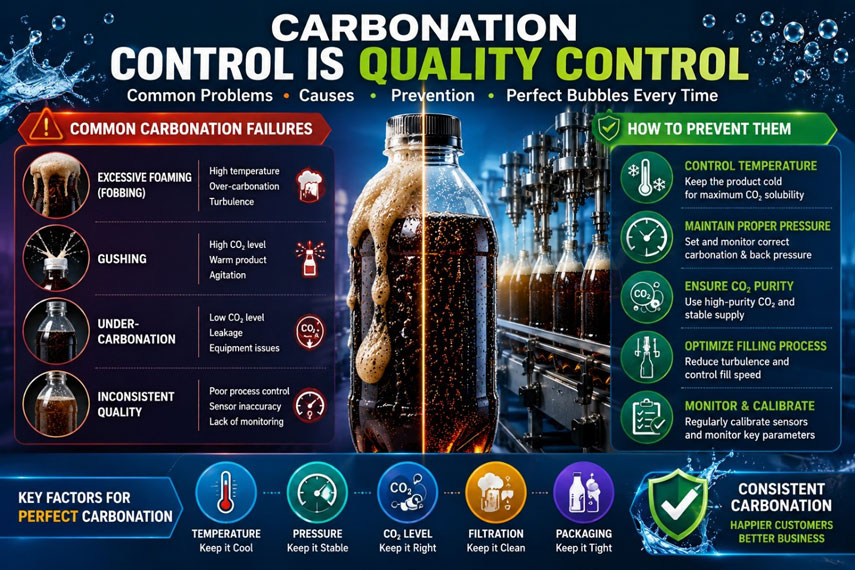
3.2. Over-Carbonation
Over-carbonation occurs when dissolved carbon dioxide exceeds product specifications or the packaging’s physical limits. In certain production systems, over-carbonation poses a greater risk to filling operations and package integrity than under-carbonation, as it increases foaming and internal package pressure (2,5).
Symptoms:
Gushing and Uncontrolled Eruption: Pressure-driven foaming, known as fobbing, can occur during the filling process. In contrast, gushing describes excessive, uncontrolled foam release upon package opening or when sudden pressure reduction.
Package Deformation: Over-carbonated products may show “bloating” or “bulging,” especially in plastic containers, as internal pressure exceeds the material’s structural limits (2,3).
High Internal Pressure: Internal package pressure may increase above typical filling pressures during storage, particularly at elevated temperatures. In some carbonated beverage systems, pressures approaching approximately 10 atm (absolute) have been reported under specific storage conditions. Actual pressure depends on beverage formulation, package type, headspace volume, and storage temperature. Reported pressure values should therefore specify whether they represent absolute or gauge pressure together with the corresponding measurement conditions (15).
Causes:
Excess CO₂ Injection: Deviation from correct carbonation setpoints, insufficient process control, or fluctuations in product temperature can cause dissolved CO₂ levels to surpass specified product limits. Target carbonation levels must be defined based on validated product specifications and shelf-life criteria.
Incorrect Pressure Settings: Faulty pressure-relief components or incorrect carbonation chamber setpoints can cause the liquid to become supersaturated beyond the target level (3,17).
Sensor Calibration Errors: Undetected measurement drift in flow meters or pressure transmitters can cause the control system to inject excess gas. Although onboard diagnostics can help detect some equipment faults, they may not identify all sources of systematic measurement bias. Therefore, scheduled calibration, reference checks, and periodic mass-balance verification should be incorporated into routine maintenance programs (3,17).
Consequences:
Foaming (fobbing): Uncontrolled foam formation occurs during filling as carbon dioxide is rapidly released from the beverage. This phenomenon is promoted by existing nucleation sites, pressure fluctuations, excessive turbulence, and, in some cases, over-carbonation during product transfer from pressurized tanks to the filler (2).
Filling Problems: Foaming often results in underfills because the foam occupies space intended for the liquid, or overfills that interfere with the capping process. These issues can trigger quality holds, increase bottle rejects, and cause line stoppages. If internal pressure exceeds the validated design limits of the package, the risk of container deformation, seal failure, or package rupture may increase (1).
Consumer Complaints: Consumers often perceive gushing products as messy and indicative of poor product quality or unintended fermentation. In severely over-pressurized packages, sudden cap ejection or rapid pressure release during opening may also pose a potential safety hazard (2,17).
3.3. Inconsistent Dissolved CO₂ Concentration
Inconsistent dissolved CO₂ concentration occurs when measured dissolved CO₂ varies significantly between containers within the same production run or across batches. Unlike consistent under- or over-carbonation, this issue signals process instability and is often harder to diagnose because it occurs intermittently.
Symptoms:
Package-to-Package Variability: Consumers may find that some bottles in the same pack have the expected “tingle,” while others are flat or overflow when opened.
Fluctuating Fill Levels: Inconsistent gas levels can cause irregular filling, leading to greater variation in fill heights during a single shift.
Erratic Line Performance: Frequent, unexplained quality holds and a high number of “rejects” at the inspection station occur without a consistent trend toward high or low pressure (16).
Causes:
Dissolved CO₂ Drift: This cumulative failure mode occurs when variations in CO₂ dosing valves, chiller efficiency, or worn pressure-relief components gradually and irregularly alter the dissolved gas level.
Control-Loop Issues: Mechanical degradation in control valves, including stiction or nonlinearity, can prevent accurate setpoint achievement. Positioner overshoot may cause severe control loop oscillations, resulting in inconsistent CO₂ injection (16).
Sensor and Instrumentation Drift: Flow meters and pressure transmitters can develop measurement drift over time. If diagnostics do not detect sensor issues, the system may dose gas based on inaccurate readings.
Inadequate Process Standardization: Without standardized procedures for machine setup and changeovers, line performance becomes inconsistent. Small differences in operator calibration or regulation contribute to batch-to-batch variance (14,16).
Mechanical Wear: Mechanical degradation of filling valves, seals, bearings, and actuator components may affect carbonation through specific mechanisms. Worn valve seals can allow air ingress or CO₂ leakage, damaged pressure-control components may create pressure imbalances during filling, and deteriorated valve timing or actuator performance may result in inconsistent filling cycles and uneven CO₂ retention. These mechanisms contribute directly to package-to-package variability in dissolved CO₂ concentration (2).
3.3.1. Prevention and Mitigation
Total Productive Maintenance (TPM): Properly implemented TPM programs can improve equipment reliability by reducing failures in valves, pumps, and filling components. Under stable operating conditions, improved equipment condition may reduce process variability and support more consistent dissolved CO₂ levels, improved fill accuracy, lower reject rates, and reduced production downtime.
Real-Time Analytics and SCADA: ES/SCADA systems provide real-time monitoring and trend analysis of carbonators and deaerators. When combined with validated sensors, predefined alarm limits, appropriate sampling frequency, and periodic verification of measurement accuracy, these systems may support earlier detection of process deviations before products fall outside specification. The effectiveness of early-warning functions depends on sensor performance, alarm logic, data validation, and routine calibration.
Regular Calibration: Strict calibration intervals for CO₂ flow control valves and flow meters prevent sensor drift and potential quality defects.
Inline Verification: Process monitoring systems and onboard diagnostics provide continuous operational data and can detect many process deviations and instrument faults. However, they may not identify all sources of systematic measurement bias or long-term sensor drift. Therefore, reliable carbonation control should also include scheduled calibration of flow meters and pressure transmitters, periodic reference checks using validated dissolved CO₂ analytical methods, and mass-balance verification to confirm measurement accuracy (19).
Lean Methodologies: Lean methodologies, including Standardized Work and 5S, improve process repeatability by reducing operator-induced variability during machine setup and changeovers. These practices indirectly improve carbonation consistency through tighter control of critical process parameters, lower reject rates, and improved Overall Equipment Effectiveness (OEE) (14,16).
3.4. Excessive Foaming During Filling
Excessive foaming, known in the industry as “fobbing,” is a disruptive failure mode that occurs during product transfer from high-pressure tanks to the filler and primary packaging. While some foam is expected, uncontrolled fobbing reduces line speed and affects carbonation stability (2).
Symptoms:
Uncontrolled “Fobbing”: Foam visibly erupts from the container neck during or immediately after filling.
Slug Foaming: Intermittent slugs of foam move through the filling valves, often indicating air pockets or CO2 loss in the delivery lines.
Erratic Fill Levels: Inconsistent liquid levels at inspection, as foam occupies space meant for the beverage.
Causes:
High Filling Temperatures: Elevated filling temperatures are a primary cause of fobbing. Because gas solubility decreases as temperature increases, any deviation above the target 0–2°C range results in CO2 escaping from solution and initiating immediate foam formation.
Air and Oxygen Ingress: Air or oxygen ingress can promote CO₂ release and reduce carbonation stability. However, bubble nucleation primarily occurs at suspended particles, surface defects, scratches, or other physical interfaces.
Excessive Turbulence: Inadequate transfer path design, high-speed transfers, or mechanical vibrations during the filling cycle generate turbulence that destabilizes the liquid and facilitates gas escape and foam formation.
Equipment Mechanical Wear: Worn fill valve seals or carousel bearing degradation can cause uneven pressure release or air leaks into the filling chamber, further aggravating the foaming process (2).
Incorrect Headspace Management: Inadequate control of headspace or improper venting during air-removal stages can lead to the occurrence of “slug foaming” (2).
Consequences:
Underfills and Rejects: Foaming may contribute to inaccurate fill-level detection depending on the sensor type, calibration, foam characteristics, and filling control strategy. This results in elevated reject rates at inspection stations and considerable product waste.
Capping Malfunctions: Excessive foam may overflow onto the container rim, disrupting the sealing and capping process. This compromises package integrity and elevates the risk of CO2 leakage throughout the product’s shelf life.
Line Stoppages: Frequent fobbing necessitates reduced line speeds or production stoppages for cleanup, which directly decreases Overall Equipment Effectiveness (OEE).
Sanitation Risks: Residual product surrounding the filler may facilitate the proliferation of environmental spoilage microorganisms and promote biofilm formation if not completely removed. The extent of this risk depends on product composition, such as sugar content and pH, ambient temperature, and the effectiveness of cleaning and sanitation procedures (1,17).
3.4.1. Prevention and Mitigation
Optimized Cooling: Maintaining precise temperature profiles in refrigeration and carbo-cooler systems prevents gas breakout caused by temperature fluctuations.
Deaeration: Employing efficient deaerators to eliminate dissolved air prior to carbonation reduces nucleation sites responsible for fobbing.
Coriolis Flow Metering: The use of Coriolis flow meters with real-time analytics facilitates early detection of dissolved CO₂ driftand dosing errors before escalation into foaming crises (2,15).
Predictive Valve Maintenance: Routine inspection and replacement of valve seals and internal components, employing methodologies such as Failure Mode and Effects Analysis (FMEA), maintain a smooth and pressure-stable mechanical path for the product (2,18).
Table 2. Common Carbonation Problems in Beverage Production
| Carbonation Problem | Main Cause | Effect | Prevention |
| Under-carbonation | Low pressure | Flat taste | Maintain pressure |
| Over-carbonation | Excess CO₂ | Gushing | Pressure calibration |
| Inconsistent carbonation | Sensor drift | Product variation | Regular calibration |
| Foaming | High temperature | Underfill | Cooling |
3.5. Troubleshooting Matrix for Carbonation Problems
Operating conditions depend on the beverage recipe, packaging type, and production needs. Table 3 shows that target dissolved CO₂ levels, beverage temperature, operating pressure, and testing methods can vary across carbonated drink types. For this reason, it is important to set process parameters using validated product specifications instead of relying on general guidelines.
Table3. Typical Operating Conditions for Carbonated Beverage Production
| Observed defect | Confirmatory measurement | Likely causes | Immediate containment | Corrective action | Verification |
| Under-carbonation | Measure dissolved CO₂ concentration | Low operating pressure, high beverage temperature, insufficient carbonation time | Hold affected batch | Adjust carbonation settings and cooling system | Re-measure dissolved CO₂ concentration |
| Over-carbonation | Measure dissolved CO₂ concentration | Excess CO₂ dosing, incorrect pressure settings | Stop production temporarily | Reduce CO₂ injection and recalibrate instruments | Confirm product specification |
| Excessive foaming | Beverage temperature and filling pressure | High temperature, turbulence, air ingress | Reduce filling speed | Optimize cooling and filling conditions | Observe stable filling performance |
| Inconsistent dissolved CO₂ concentration | Statistical CO₂ measurements across samples | Instrument drift, unstable control loop, valve wear | Inspect critical equipment | Recalibrate sensors and repair faulty components | Confirm process stability through routine monitoring |
4. Strategies for Preventing Carbonation Problems
Effective prevention of carbonation problems in production lines necessitates a comprehensive approach that combines rigorous preventive maintenance, precise process control, and the use of high-performance packaging materials.
4.1. Maintenance and Instrumentation Control
Proactive equipment management is essential to prevent dissolved CO₂ drift over time.
Regular Calibration: Calibrate CO2 flow control valves, flow meters, and pressure-relief assemblies at defined intervals to ensure accurate dosing and consistent carbonation levels.
Seals and Bearings: Routinely inspect and replace fill valve seals and carousel bearings to prevent gas leakage or air ingress, which can reduce carbonation.
TPM Implementation: Total Productive Maintenance (TPM) practices, including autonomous and planned maintenance, help identify common causes of failure in filling machines (like worn pistons or valves) before they lead to breakdowns (2,4).
4.2. Optimization of Process Variables
Keeping the beverage in optimal physical condition maximizes CO2 solubility as described by Henry’s Law.
Temperature Control: Beverages should be chilled to 0–2°C during filling. Higher temperatures reduce CO2 solubility, causing foaming and under-carbonation.
Pressure Management: For many carbonated soft drink filling systems, an operating filling pressure of approximately 2–4 bar (gauge) is commonly used to maintain dissolved CO₂ and minimize foaming. However, the required pressure depends on beverage formulation, target dissolved CO₂ concentration, package design, filling equipment, and operating temperature (14,16).
5. Advanced Filling and Packaging Strategies
Product handling during the final production stages directly affects long-term stability.
Filling Methods: For glass bottles, double-evacuation techniques effectively eliminate oxygen ingress during filling, which can destabilize carbonation (15).
Barrier Properties: Because all plastics are permeable to gases, manufacturers can reduce CO2 loss in PET bottles by using barrier-enhancing additives, multilayer structures, or internal coatings such as Diamond-Like Carbon (DLC) (2,4).
Sealing Integrity: Regular inspection of the seal between the container and closure is essential because carbonation failures in glass packages may commonly involve leakage at the container–closure interface rather than defects in the bottle body. However, the relative contribution of closure leakage and bottle defects depends on package design, closure type, manufacturing quality, and filling conditions (15,16).
6. Quality Management Methodologies
Systematic frameworks allow for the early detection of process deviations.
Failure Mode and Effects Analysis (FMEA) is a structured risk-assessment tool used to identify equipment and process failure modes that could affect critical carbonation control parameters, including beverage temperature, CO₂ dosing accuracy, filling pressure, fill accuracy, and package integrity. Corrective actions derived from FMEA reduce process variability rather than directly controlling carbonation (18).
Real-Time Analytics (SCADA/MES) integrate data from inline carbonators and deaerators for process monitoring and trend analysis. When supported by validated sensors, predefined alarm thresholds, and routine verification procedures, these systems may assist in identifying CO₂ dosing drift or temperature-related process deviations before products fall outside specification.
Standardized Work: Using structured methods such as 5S promotes workplace organization and consistent instructions, reducing variability from human error across shifts (15,16).
7. Storage and Distribution
Prevention measures must also be applied throughout the supply chain.
Temperature-Controlled Storage: Refrigeration extends the shelf life of carbonated beverages by reducing gas loss through packaging (5).
Handling Protection: Preventing rough handling and high-temperature transit, such as in uncooled rail cars, helps maintain seal integrity and prevents package deformation (2,4). In addition, routine monitoring of beverage temperature, operating pressure, dissolved CO₂ concentration, fill accuracy, and package integrity helps maintain consistent carbonation throughout production and distribution. These parameters should remain within validated product specifications to minimize carbonation-related quality defects.
8. Conclusion
Maintaining dissolved CO₂ concentration within validated product specifications remains a key technical requirement in carbonated beverage production. As discussed throughout this review, carbonation performance depends on the combined control of beverage temperature, operating pressure, equipment condition, instrumentation accuracy, and package integrity rather than on any single processing variable. Published evidence indicates that preventive maintenance, routine calibration, standardized operating procedures, and appropriate process monitoring may reduce process variability and support more consistent carbonation performance when implemented under validated operating conditions. These practices are associated with improved control of carbonation-related quality attributes rather than guaranteeing specific production or business outcomes.
Frequently Asked Questions (FAQs)
1. Which production data should be reviewed first when carbonation levels become inconsistent?
When carbonation variability occurs, review product temperature, carbonation pressure, flow rate, filler settings, and recent process alarms. Comparing historical production trends can help identify when the deviation first appeared.
2. How can sensor drift affect carbonation control accuracy?
Sensor drift may cause inaccurate pressure or temperature measurements, leading to incorrect carbonation adjustments. Routine calibration and verification against reference instruments help maintain measurement accuracy.
3. What are the early warning signs of carbonation system instability?
Increasing variation in dissolved CO₂ measurements, frequent process adjustments, inconsistent fill performance, and abnormal foaming may indicate developing system instability before products fall outside specification.
4. How can production teams distinguish equipment faults from process-related carbonation problems?
Equipment faults often produce recurring measurement errors or unstable operation, while process-related issues are usually associated with changes in operating conditions or product parameters. Reviewing process data alongside maintenance records helps identify the root cause.
5. Which operational indicators should be monitored to reduce carbonation-related product losses?
Key indicators include dissolved CO₂ concentration, beverage temperature, carbonation pressure, filling performance, reject rates, and package integrity. Monitoring these variables together provides a more reliable assessment of process stability than evaluating a single parameter alone.
Reference:
- Lawlor KA, Schuman JD, Simpson PG, Taormina PJ. Microbiological spoilage of beverages. In: Sperber WH, Doyle MP, editors. Compendium of the Microbiological Spoilage of Foods and Beverages. New York (NY): Springer; 2009. p. 245–284. doi:10.1007/978-1-4419-0826-1_9.
- Robertson GL. Food Packaging and Shelf Life: A Practical Guide. Boca Raton (FL): CRC Press; 2009. doi:10.1201/9781420078459.
- Viejo CG, Torrico DD, Dunshea FR, Fuentes S. Bubbles, foam formation, stability and consumer perception of carbonated drinks: a review of current, new and emerging technologies for rapid assessment and control. Foods. 2019;8(12):596. doi:10.3390/foods8120596.
- Donald JR, Jones CL, Maclean AR. The effect of carbonation on bacteria in beverages. Am J Public Health. 1924;14(2):122-128. doi:10.2105/AJPH.14.2.122.
- Tock RW, Woo C, Watson J, Schwarz R. PET beverage bottles: carbonation losses in perspective. Adv Polym Technol. 1984;4(3-4):307-315. doi:10.1002/adv.1984.060040310.
- Newton Yau NJ, McDaniel MR. The effect of temperature on carbonation perception. Chem Senses. 1991;16(4):337-348. doi:10.1093/chemse/16.4.337.
- Nesterova E, Morozova P, Gladkikh M, Kazemzadeh S, Syromyatnikov M. Molecular methods for detecting microorganisms in beverages. Beverages. 2024;10(2):46. doi:10.3390/beverages10020046.
- Eßlinger HM, editor. Handbook of Brewing: Processes, Technology, Markets. 1st ed. Weinheim (Germany): Wiley-VCH Verlag GmbH & Co. KGaA; 2009. doi:10.1002/9783527623488.
- Lewis MJ, Young TW. Brewing. 2nd ed. New York (NY): Kluwer Academic/Plenum Publishers; 2002.
- Mitchell AJ, editor. Formulation and Production of Carbonated Soft Drinks. New York (NY): Springer Science & Business Media; 1990.
- Smith RJ, Davidson DE, Wilson R. Natural foam stabilizing and bittering compounds derived from hops. J Am Soc Brew Chem. 1998;56(2):52-57.
- Simpson W, Hughes P. Stabilization of foams by hop-derived bitter acids: chemical interactions in beer foam. Cerevisia Biotechnol. 1994;19:39-44.
- Rudin AD. Measurement of the foam stability of beers. J Inst Brew. 1957;63:506-509. doi:10.1002/j.2050-0416.1957.tb06291.x.
- Vargas-Romero B, Urbizagastegui-Jaramillo B, Collao Diaz M, Quiroz-Flores J. Enhancing production efficiency and quality in the carbonated beverage industry: a lean manufacturing approach. In: Proceedings of the 9th North American Conference on Industrial Engineering and Operations Management; 2024 Jun 4. doi:10.46254/NA09.20240206.
- Steen D, Ashurst PR, editors. Carbonated Soft Drinks: Formulation and Manufacture. Chichester (UK): John Wiley & Sons; 2008.
- Newbold D, Koppel K. Carbonated dairy beverages: challenges and opportunities. Beverages. 2018;4(3):66. doi:10.3390/beverages4030066.
- Azeredo DRP, Alvarenga V, Sant’Ana AS, Sabaa Srur AUO. An overview of microorganisms and factors contributing to the microbial stability of carbonated soft drinks. Food Res Int. 2016; 82:136-146. doi: 10.1016/j.foodres.2016.01.024.
- Stamatis DH. Failure Mode and Effect Analysis: FMEA from Theory to Execution. 2nd ed. Milwaukee (WI): ASQ Quality Press; 2003.
- Doebelin EO. Measurement Systems: Application and Design. 4th ed. New York (NY): McGraw-Hill; 1989.