
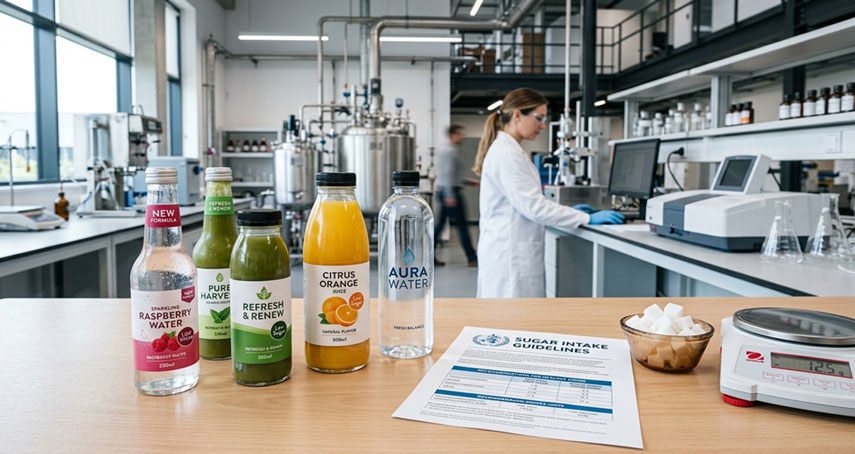
WHO Sugar Intake Guidelines and Their Impact on Beverage Formulation
The global beverage industry is currently undergoing a fundamental paradigm shift. Driven by stringent health regulations and an evolving consumer consciousness regarding metabolic health, industrial manufacturers are compelled to reevaluate their raw material supply chains and core formulations.
Producing low-sugar or zero-sugar beverages on an industrial scale is not merely a process of subtraction. Sucrose is a multifunctional ingredient; removing it requires the complex reverse engineering of the product’s rheology, flavor profile, and thermodynamic stability. In this article, we examine the scientific impacts of these regulatory shifts, the physicochemical challenges involved, and the modern formulation solutions available to industrial producers.
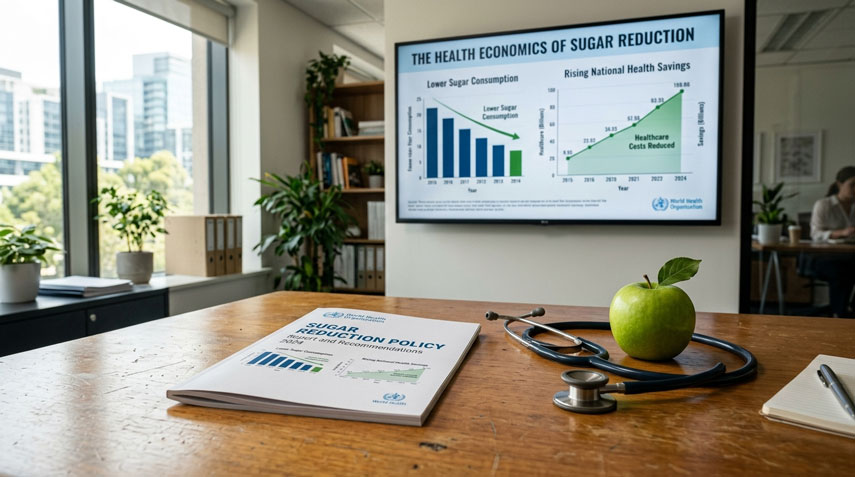
WHO Regulations and the Economic/Health Benefits of Sugar Reduction
The World Health Organization (WHO) provides scientifically backed guidelines recommending that the consumption of free sugars be reduced to less than 10% of total daily energy intake. To achieve optimal health benefits, particularly in combating the global epidemic of obesity and metabolic syndrome, the organization recommends a further reduction to below 5% of total energy intake.
These guidelines have served as the catalyst for the implementation of “sugar taxes” or tiered levy systems in numerous global markets. From an industrial and strategic perspective, aligning with these guidelines offers several distinct advantages:
- Enhancing Public Health: Meaningful reductions in the glycemic index of beverages directly lower the risks associated with obesity, cardiovascular diseases, and type 2 diabetes.
- Lowering Production Costs and Mitigating Tax Liabilities: Formulating below the taxable sugar thresholds protects profit margins. High-sugar beverages are increasingly becoming economically unviable due to heavy taxation.
- Strategic Brand Positioning: Creating scientifically validated, health-conscious product lines attracts loyal consumers in a market segment that shows the highest Compound Annual Growth Rate (CAGR) in the food sector.
Key Physicochemical Challenges in Sugar Reduction
Sucrose dictates the physicochemical balance of a beverage. Beyond activating sweet taste receptors, sugar acts as a critical bulking agent, an osmotic pressure regulator, and a stabilizer. Its removal introduces a cascade of technical hurdles:
- Brix Reduction and Rheological Collapse (Loss of Mouthfeel): In the beverage industry, 1 Brix equates to 1 gram of sucrose in 100 grams of solution. Reducing Brix drastically alters the specific gravity and viscosity of the fluid. The beverage shifts toward a strictly Newtonian fluid behavior, resulting in a watery, thin, and unappealing mouthfeel.
- Emergence of Off-notes and Receptor Interference: High-intensity alternative sweeteners, such as steviol glycosides and sucralose, interact differently with taste receptors. They often bind to TAS2R bitter receptors, introducing lingering metallic, astringent, or licorice-like aftertastes that disrupt the intended flavor architecture.
- Color Degradation and Chromophore Oxidation: Sugar plays an underappreciated role in protecting color stability. It acts as a mild antioxidant and reduces water mobility, which protects natural pigments (like anthocyanins and carotenoids) from rapid oxidation. Without sucrose, UV light and dissolved oxygen degrade chromophores much faster, leading to a cloudy, faded, or browned appearance.
- Rapid Carbonation Loss (CO2 Volatility): According to Henry’s Law, the solubility of a gas in a liquid is proportional to the pressure of that gas. However, the macro-viscosity provided by sugar increases the surface tension and helps trap CO2bubbles. Without this structural network, bubble nucleation accelerates, causing the gas to escape rapidly and the beverage to go “flat” prematurely.
- Microbial Instability and Osmotic Shifts: Sugar acts as a natural preservative by binding free water, thereby lowering the water activity. Removing sugar increases aw, drastically reducing the osmotic pressure that typically inhibits bacterial and fungal growth, making the product highly susceptible to spoilage.
Advanced Solutions, Industrial Applications, and Quality Control
To counter these thermodynamic and sensory challenges, R&D departments and specialized ingredient suppliers utilize advanced “hurdle technology” and hydrocolloid engineering:
Hydrocolloids and Botanical Powders: To compensate for the loss of mouthfeel and viscosity in sugar-free formulations, the addition of natural gums and functional plant-based fibers (such as acacia gum or citrus pectin) effectively restores the beverage’s body without adding caloric density.
Taste Modulators and Masking Agents: Instead of merely adding more flavor, advanced masking agents work via competitive inhibition—blocking the bitter taste receptors on the tongue.
Comprehensive Sensory Evaluation: To validate the success of the new formulation, extensive sensory testing is conducted by professional sensory assessors. These trained panels rigorously evaluate the flavor profile, mouthfeel, and aftertaste to ensure the sugar-reduced product matches the original consumer experience.
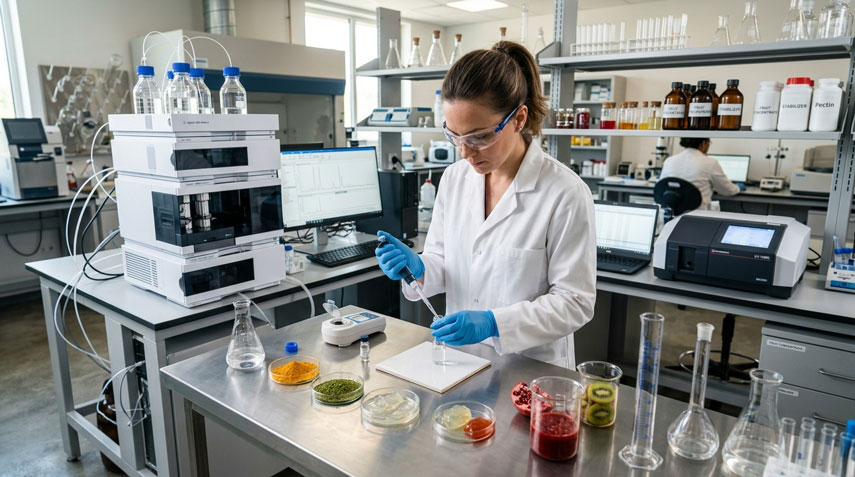
Quality Control and Analytical Methods: Ensuring the success of these new formulations requires rigorous lab testing. Industrial standards mandate the use of High-Performance Liquid Chromatography (HPLC), spectrophotometry, and refractometry. Furthermore, conducting periodic stability testing over time is crucial to monitor shelf-life parameters, ensuring the product maintains its structural integrity, color, and microbial safety throughout its entire lifecycle.
Color and Carbonation Stabilizing Systems: To combat color degradation from chromophore oxidation, these systems often incorporate natural antioxidants . Simultaneously, to address rapid carbonation loss, they utilize specific, synergistic hydrocolloid and surfactant blends that subtly increase viscosity and modify surface tension. This matrix effectively slows the rate of CO₂ escape, preserving the desired effervescence and sensory experience.
Ready to engineer the future of your beverage line?
Contact our B2B technical sales team today to request detailed specifications, laboratory samples, and a customized price quote tailored to your high-volume industrial production needs.
Frequently Asked Questions (FAQ) for B2B Buyers
1. How exactly can manufacturers prevent rapid carbonation loss and color degradation in zero-sugar formulations without altering the taste?
Sugar naturally builds the necessary viscosity to trap CO2 and acts as a barrier against chromophore oxidation. To fix these issues, factories must utilize highly specialized gas-stabilizers and color preservers. By integrating advanced additive solutions )such as the targeted stabilizing blends developed by Imbevia( manufacturers can lock in carbonation and protect pigments at a molecular level. These stabilizers are designed to be completely flavor-neutral, preventing degradation without interfering with your core flavor profile.
2. While advanced R&D-driven stabilizers and ingredients carry a higher initial procurement cost than basic sugar, how do they ensure economic viability and deliver a positive long-term ROI on an industrial scale, particularly regarding waste reduction?
Yes, it is highly cost-effective. While premium hydrocolloids, antioxidants, and masking agents carry an initial procurement cost, they are used in micro-dosages. More importantly, They improve shelf stability by controlling water activity and stabilizing color. This means factories stop wasting capital on overdosing expensive artificial pigments and flavors to compensate for degradation. On an industrial scale, minimizing rejected batches and extending shelf-life leads to significant long-term ROI.
3. When reformulating to reduce sugar, many manufacturers focus primarily on microbial safety to extend shelf-life, yet their beverages still suffer from rapid quality deterioration. How do your solutions address the full spectrum of shelf-life stability, and how do they support quality assurance and HACCP audits?
Shelf-life is a comprehensive metric that goes beyond merely preventing microbial spoilage; it encompasses the physical and sensory stability of the product over time. While our advanced ingredients strictly control water activity to prevent microbial growth, they simultaneously address other critical aspects of shelf-life—specifically locking in carbonation (CO2) and preventing color degradation (chromophore oxidation). By securing all dimensions of shelf-life, these solutions prevent the rapid deterioration often seen in sugar-free beverages. Furthermore, our ingredients come with full technical documentation (COA, TDS) and comply with strict food safety standards, including ISO 22000 and HACCP, facilitating your quality assurance audits.