
The Role of Ingredient Suppliers in Accelerating Beverage R&D Cycles
A promising beverage concept can die quietly in the development lab, not because the idea was wrong but because the process meant to prove it out moved too slowly. Ingredient suppliers sit closer to the center of that process than their role on a spec sheet suggests. A growing body of research treats them as genuine co-developers rather than passive vendors, and the evidence points to a consistent pattern: companies that draw suppliers into product development earlier, and more deliberately, may help reduce rework under defined conditions and with fewer costly surprises when the project has clear technical requirements, fast internal decision-making, and a supplier with validated application expertise [1][10].
This review presents a narrative synthesis of selected literature, including peer-reviewed studies, industry case studies, and practical reports. These sources are used to identify recurring themes rather than provide equally weighted evidence.
Suppliers as Co-Developers, Not Just Vendors
The Integrated Product Development and Sourcing framework, built originally for assembly industries and later benchmarked across food companies, breaks supplier involvement into strategic processes, such as deciding what to outsource and pre-selecting suppliers for future projects, and operational processes, such as setting communication interfaces and evaluating supplier performance project by project [1]. Companies that scored highest on these processes also produced the fastest results: as an illustrative case study, a Dutch soft-drink manufacturer developed a carbonated beverage from scratch to market, including a new preparation method, packaging material, and manufacturing technology, in five months by working closely with a filling partner, and it scored above target on time-to-market (reported as a single case study, without a disclosed baseline or comparator). A Scandinavian counterpart with a more ad hoc, reactive approach to the same kind of collaboration launched a fish spread product six months behind schedule, largely because there was no predetermined framework guiding how the supplier relationship should function, again as a single reported case rather than a general finding [2].
A parallel study of two Brazilian powdered soft-drink producers found the same dynamic at a smaller scale. Every raw material used in the finished products, apart from one company’s in-house fumaric acid, came from outside suppliers, and the two companies handled that dependence differently: one accepted supplier-suggested product ideas and cultivated long-term relationships, while the other pre-established technical conditions and re-selected suppliers annually on price and qualification [2][10]. Both reported the same reported perceived benefits from supplier involvement: shorter development time and lower cost, which they attributed to arising from shared effort and less duplicated work between company and supplier teams. These outcomes were self-reported by the companies and were not independently verified [10].
A Spectrum of Supplier Relationships
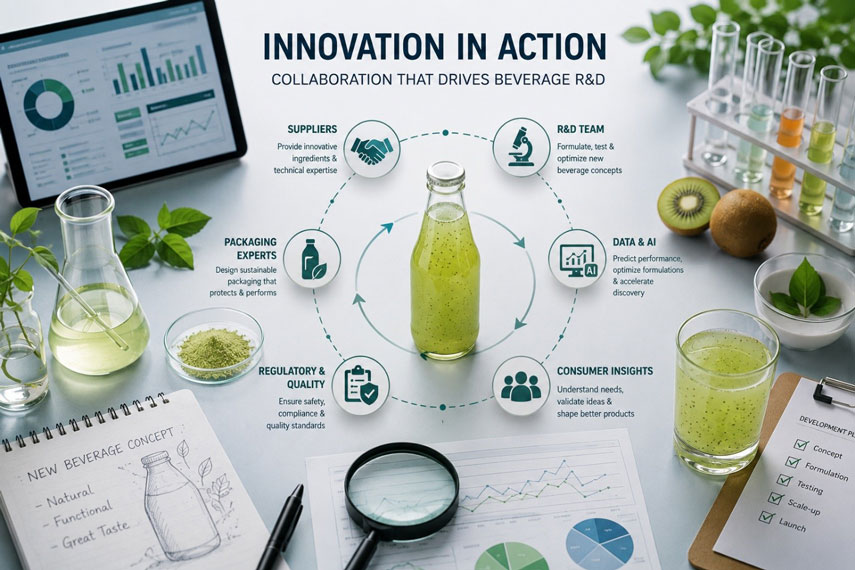
Not every supplier plays the same role, and treating them all the same wastes the opportunity. A widely used typology distinguishes partners, who co-develop entire subsystems and get involved at the concept stage, from mature suppliers, who receive critical specifications but still contribute complex work, from capability-limited suppliers, who build simple components to detailed instructions, and contractual suppliers, who sell standardized products off a catalogue. In the Brazilian case, fragrance suppliers acted as true partners, shaping product ideas and cutting development time, sugar suppliers filled a capability-limited-supplier role by producing a specified granulometry, and most other ingredient suppliers were purely contractual [2]. The same logic recurs in the technical-assistance mapping used across the food industry more broadly, where supplier contact touches every phase of development, from idea generation and feasibility testing at the concept stage through prototype development, formulation, and shelf-life work, and eventually sensory testing and regulatory support once the product nears production [1]. Across this whole span, suppliers may support screening, prototyping, and troubleshooting, but the manufacturer retains ownership of final formula approval, process validation, stability confirmation, label claims, and regulatory compliance.
Table 1. Supplier relationship typology in beverage product development [10]
| Supplier Type | Nature of Involvement | Typical Beverage Example |
| Partner | Co-develops entire subsystems; involved from the concept stage onward | Flavor/fragrance supplier shaping a new product idea |
| Mature Supplier | Receives critical specifications but still contributes complex development work | Ingredient supplier executing a client-defined technical brief |
| Capability-Limited Supplier | Produces a component to detailed client specifications | Sugar supplier producing a specified granulometry |
| Contractual Supplier | Sells standardized products from a catalogue; involved late, if at all, in development | Distributor of common food additives |
Looking Beyond the Factory Gate: Open Innovation
Supplier collaboration is one expression of a broader shift toward open innovation, defined as the purposive use of inflows and outflows of knowledge to speed internal innovation and extend the markets for it. In food and beverage specifically, the knowledge worth pulling in comes from an unusually wide set of actors: farmers, ingredient suppliers, retailers, consumers, biotechnology firms, and universities all sit inside the value chain in ways that other manufacturing sectors rarely see. Industry case evidence suggests several potential benefits. A flavor supplier that outsourced part of its design process to customers through an online toolkit avoided costly market research while gathering better taste data than in-house testing could have produced, and a biotechnology firm developing a genetically modified tomato built a network spanning seed companies, farmers, packers, and consumers to acquire capabilities it did not have internally [3]. Three recurring open-innovation models emerge from this research: a Sharing-is-Winning approach built around co-creation with universities, start-ups, and strategic suppliers; a food-machinery framework in which supplier relationships mature early while customer relationships stay comparatively underdeveloped; and a Want-Find-Get-Manage model, used by companies such as Mars, that treats partner selection as a disciplined four-step process rather than an improvised one [2].
Matching the Development Process to the Knowledge Gap
Faster development also depends on choosing the right process for what a company still needs to learn, not defaulting to the same gated procedure for every project. A hybrid model matrix built from a year-long study inside a global food and beverage company plots projects along two axes, knowledge about users and knowledge about the product category, and matches each quadrant to a different blend of methods. Familiar territory stays on a traditional Stage-Gate track; projects entering an unfamiliar consumer segment bring in design thinking to build user understanding before committing to detailed development, as in a biscuit project that used eight weeks of design-thinking work with an external research partner to confirm a dried-fruit trend and define the right consumption occasion. Projects short on both user and category knowledge add Lean Startup experiments on top of design thinking, illustrated by a legumes-based main course that spent a year iterating shelf format, portion size, and branding with a retail partner before settling into the company’s permanent range [4]. A related model, Agile-Stage-Gate, borrows two-week sprints and daily stand-ups from software development to keep the gating structure intact while making the product definition itself flexible; one industrial adopter used two-week sprints for design and customer validation and found the approach delivered products more adaptive to market needs, even though some engineers were frustrated by not having a frozen specification from day one [5].
Table 2. The Hybrid Model Matrix: matching development method to knowledge gaps [6]
| High Category Knowledge | Low Category Knowledge | |
| High User Knowledge | Stage-Gate | Agile + Stage-Gate |
| Low User Knowledge | Design Thinking + Stage-Gate | Design Thinking + Lean Startup + Stage-Gate |
Speed Is a Capability, Not an Accident
Process choice only helps if the organization actually acts on what it learns. Research spanning 247 manufacturing firms found that simply generating and distributing market intelligence did not, on its own, move the needle on innovation speed or new product performance; what mattered was responsiveness, the degree to which a firm actually acted on the intelligence it gathered, which had the strongest link to both faster innovation and better new product outcomes. That responsiveness effect grew stronger the more experienced a firm already was at using market intelligence, suggesting that speed compounds rather than appearing overnight [6].
In this review, development timelines are reported as described in the original sources. Where available, milestones may include concept approval, ingredient sample receipt, bench-scale formulation, pilot validation, regulatory approval, first commercial production, and market launch. Because these milestones are not reported consistently across studies, direct comparisons of time-to-market should be interpreted with caution.
A qualitative study of eight Finnish food and beverage ventures found a related pattern inside the development process itself: internal experimentation, on recipes, textures, and manufacturing process, ran constantly across every company and every stage, while external experiments with users, retailers, or experts were comparatively rare and used mainly to validate a direction the team had already chosen rather than to discover a new one. Companies extending an existing flavor line moved fastest of all, sometimes taking as little as two months from ordering ingredient samples to market introduction, because they trusted their own sense of taste and relied less on formal concept testing than companies entering genuinely new product categories [7].
Functional Ingredients as an Accelerant and a Complication
Functional ingredients illustrate both sides of supplier involvement: they can shorten the path to a differentiated product, but they also import real formulation complexity. Probiotic strains have to survive gastric acidity, bile salts, and the specific pH and temperature conditions of a given beverage matrix before survival alone can be treated as evidence toward any health claim, which separately requires a confirmed viable count at end of shelf life, clinical substantiation, and jurisdiction-specific claim authorization, which is why supplier expertise in strain selection and stabilization may help address key feasibility challenges in probiotic beverage development, including maintaining viability during processing and throughout shelf life, while successful commercialization also depends on sensory performance, regulatory compliance, and market positioning. [15]. Formulation research on plant-based antioxidant beverages shows the same trade-off from a different angle: blends combining several medicinal plants consistently outperformed single-plant beverages on antioxidant capacity and acetylcholinesterase inhibition, and fermenting the blend with retained plant residue further increased phenolic and flavonoid content, but reaching that optimized blend required testing multiple formulations against several analytical assays rather than trusting a single ingredient’s reputation [8]. Suppliers with pre-validated formulation expertise may help reduce technical uncertainty during beverage development, although its effect on development speed depends on project-specific factors and requires direct cycle-time evidence.
AI Enters the Supplier Relationship
The newest layer of acceleration is algorithmic rather than organizational. Non-generative AI applications, optimization, discovery, and prediction, screen far more of the ingredient and formulation space than manual trial and error ever could, while generative approaches now propose entirely new formulations from a natural-language brief. An industry case example reported that a proprietary discovery platform analyzed roughly 700,000 compounds to identify two bioactive molecules and then predicted hemp hulls as their richest natural source, a process that would have taken years through conventional screening. Formulation platforms built on the same idea have used molecular analysis of animal-based products to design plant-based alternatives, and flavor-pairing tools have helped a major consumer brand identify complementary plant-based ingredient combinations as part of a broader shift toward plant-based portfolios. None of this replaces supplier expertise; it changes what suppliers bring to the table, shifting the conversation from a catalogue of available ingredients toward a shortlist that has already been screened against a beverage’s target taste, texture, and nutrition profile [9]. These tools can prioritize candidates, but they do not replace experimental confirmation; before citing an AI output as development evidence, the training data source, prediction error, external validation, and false-positive rate should be reported.
The Technical Backbone Suppliers Bring to Formulation
Behind many accelerated timelines sits technical work that ingredient and equipment suppliers may support through specialized expertise, analytical tools, and application capabilities that are not always available within a standalone beverage company.. Developing a chocolate-flavored peanut-soy beverage, for instance, required calculating protein recovery separately for peanut, soy flour, and soy protein isolate, constraining the mixture design around a target lysine content, and testing multiple milling and homogenization sequences before finding the combination that gave the smoothest mouthfeel [10]. Fermented and cultured beverages depend just as heavily on fluid dynamics: as a technical example, computational fluid dynamics modelling of bioreactors has predicted power draw, liquid levels, and mixing times accurately enough to cut energy use by half without harming biomass production in the modeled scenario, a result tied to the specific geometry, operating conditions, and calibration data used rather than a general outcome, and similar modelling applied to brewing simulates wort cooling and gas-liquid interactions to catch dead zones before they show up as inconsistent batches [11].
This relationship is a simplified scaling illustration rather than a direct prediction of commercial beverage shelf life, as real systems are affected by droplet-size distribution, interfacial film strength, pH, ionic strength, rheology, and other interacting factors. [12].
Packaging and Regulatory Support as Hidden Acceleration Points
Two supplier contributions rarely make it into a tasting-room conversation but routinely decide whether a formulation is viable at all. Packaging science determines how long a beverage can actually survive on a shelf: oxygen and carbon dioxide permeability can vary substantially between packaging polymers, and a package’s surface-area-to-volume ratio can materially affect shelf life under defined conditions, depending on product sensitivity, closure integrity, and storage conditions., which means packaging suppliers are effectively co-authors of a beverage’s formulation constraints rather than an afterthought bolted on at the end [13]. Regulatory expertise plays a similar role on the ingredient side. Novel additives face a tiered testing burden that scales with estimated human exposure, while ingredients that qualify as Generally Recognized as Safe can move through a lighter-touch notification process instead of full food-additive review a U.S.-specific safety pathway, via self-determination or FDA notification, that does not substitute for ingredient-use limits, labeling rules, or other country-specific regulatory requirements elsewhere, and suppliers with regulatory expertise may help reduce avoidable regulatory rework by supporting ingredient classification, safety documentation, permitted-use assessment, labeling requirements, and claims substantiation. However, regulatory timelines vary considerably depending on jurisdiction, ingredient novelty, dossier quality, intended claims, and agency requirements. [14].
Beyond Traditional B2B: Newer Collaboration Models
Large-supplier partnerships are not the only route to faster, better-sourced beverage development. Research across fourteen short food supply chain initiatives in nine European countries documents business-to-business, business-to-consumer, consumer-to-business, and business-to-business-to-consumer arrangements, all built on a common set of interaction mechanisms: information sharing, goal congruence, decision synchronization, incentive alignment, resource sharing, collaborative communication, and joint knowledge creation. Not every mechanism needs to be present for the arrangement to work, and the benefits extend beyond price: participating farmers and small producers reported gains in market knowledge, technological skill, and reputation alongside the more obvious tangible benefits of fair pricing and lower transaction costs. For smaller or emerging beverage brands, these direct, relationship-based sourcing models offer a faster and often lower-risk way to access differentiated, locally grown ingredients than negotiating with a large multinational supplier from a position of limited scale [16].
These benefits are not without cost. Supplier-led acceleration can create commercial dependence: proprietary formulation platforms and exclusive ingredient technologies may increase switching costs and create reliance on a single supplier’s capabilities, minimum-order volumes may exceed the needs of early-stage brands, and ownership or access to data generated during joint development may depend on the contractual agreement between partners. A beverage company balancing faster development against these risks should consider governance mechanisms such as dual sourcing and contingency planning as part of its supplier strategy. Managing these risks requires clear arrangements before and during collaboration. Partners should define IP ownership, data access rights, and confidentiality obligations at the beginning of the project. Where exclusivity is considered, its scope and duration should be aligned with business needs, while second-source qualification and change-notification procedures can reduce supply continuity risks. Agreements should also address minimum-order commitments and technical transfer provisions to maintain flexibility if the partnership needs to be modified or terminated.
Conclusion
None of these threads works in isolation. Structured supplier-involvement frameworks and clear supplier typologies set the relationship up correctly from the start [1][2]; open innovation and short food supply chain models widen the pool of ingredients and ideas a company can draw on [3][16]; hybrid development processes and a genuine organizational habit of acting on market intelligence determine how quickly that raw material turns into a finished concept [4][5][6][7]; and functional-ingredient science, AI-assisted formulation, fluid dynamics, emulsion stability, packaging, and regulatory expertise supply the technical depth that keeps a fast-moving project from failing quietly in scale-up [9][10][11][12][13][14][15][16]. These threads carry different evidentiary weight: the organizational and collaboration findings above rest mainly on case reports, while the fluid-dynamics, emulsion, and formulation-science claims rest on mechanistic or experimental data; the two should not be read as equally generalizable. The reviewed evidence suggests that beverage R&D cycles may be shortened when the right suppliers are pulled into the right stage of the process, with the right process wrapped around them.
Frequently Asked Questions (FAQ)
What does it mean for a supplier to be a “partner” rather than a vendor?
A partner supplier is involved from the concept stage onward, co-developing a subsystem or ingredient rather than simply filling a specification handed down after the fact. Contractual suppliers, by contrast, sell standardized products off a catalogue and enter the process much later [10].
Which development process should a beverage company use for a new project?
It depends on what the team already knows. Familiar categories and familiar users can stay on a standard Stage-Gate track; unfamiliar users call for design thinking; unfamiliar categories call for Lean Startup experiments; and projects that are well understood but need fine-tuning benefit from Agile sprints layered onto Stage-Gate [6].
Is external experimentation, like consumer testing, more important than internal testing?
Not for most companies. Internal experimentation on recipe, texture, and process runs constantly throughout development, while external testing is used mainly to validate a direction the team has already chosen rather than to generate new ones [4].
How is AI actually changing supplier relationships?
AI may help narrow the ingredient and formulation space at early stages of development, providing a prioritized list of candidates for further evaluation with suppliers and technical teams. Optimization, discovery, and generative tools can screen large numbers of compounds or formulations and suggest potential candidates from a defined brief; however, these outputs still require laboratory confirmation, ingredient qualification, formulation screening, regulatory assessment, and pilot validation before commercial application. As a result, AI may shift supplier interactions from reviewing broad ingredient catalogues toward evaluating more targeted candidates supported by additional technical evidence [9].
Why do packaging and regulatory suppliers’ matter for R&D speed, not just compliance?
Packaging permeability and surface-area-to-volume ratio directly set a formulation’s real shelf life, and knowing in advance whether an ingredient needs full food-additive testing or can move through a lighter GRAS pathway can save months of otherwise unavoidable regulatory work [13][15].
References
- van der Valk, W., & Wynstra, F. (2005). Supplier involvement in new product development in the food industry. Industrial Marketing Management, 34(7), 681–694.
- Onoyama, M. M., Assumpção, M. R. P., Toledo, J. C. de, Bianchini, V. K., & Costa, B. P. C. da. (2005). Involvement of ingredients suppliers in new products development in the soft drinks industry. Product, 3(1), 55–60.
- Dabic, M., Hjortsø, C., Marzi, G., & Vlacic, B. (2022). Guest editorial: Open innovation in the food industry: what we know, what we don’t know, what we need to know. British Food Journal, 124(6), 1777–1785.
- Cocchi, N., Dosi, C., & Vignoli, M. (2021). The Hybrid Model Matrix: Enhancing Stage-Gate with Design Thinking, Lean Startup, and Agile. Research-Technology Management, 64(5), 18–30.
- Cooper, R., & Sommer, A. (2016). Agile-Stage-Gate: New idea-to-launch method for manufactured new products is faster, more responsive. Industrial Marketing Management, 59, 18–28.
- Carbonell, P., & Rodríguez-Escudero, A. (2010). The effect of market orientation on innovation speed and new product performance. Journal of Business & Industrial Marketing, 25(7), 501–513.
- Kukko-Liedes, V., Talvinko, M., & Björklund, T. (2019). Experimentation Throughout the Product Development Process – Lessons from Food and Beverage Ventures. Proceedings of the Design Society: International Conference on Engineering Design, 1(1), 1145–1154.
- Nanasombat, S., Thonglong, J., & Jitlakha, J. (2015). Formulation and characterization of novel functional beverages with antioxidant and anti-acetylcholinesterase activities. Journal of Applied Sciences Research, 5(1).
- Kuhl, E. (2025). AI for food: accelerating and democratizing discovery and innovation. npj Science of Food, 9, 82.
- Deshpande, R., Chinnan, M., & Phillips, R. (2007). Process development of a chocolate-flavoured peanut–soy beverage. International Journal of Food Science & Technology, 43(5), 886–894.
- Al-Sharify, Z. T., Onyeaka, H., Al-Sharify, N. T., AL-Sharify, T. A., Al-Dabooni, N. M., Alshrefy, Z. A. I., Tamasiga, P., & Akinsemolu, A. A. (2025). Optimizing Beverage Production: The Role of Fluid Dynamics in Microbial Fermentation. Journal of Food Processing and Preservation, 2025, 8811731.
- Taherian, A., Fustier, P., Britten, M., & Ramaswamy, H. (2008). Rheology and Stability of Beverage Emulsions in the Presence and Absence of Weighting Agents: A Review. Food Biophysics, 3, 279–286.
- Awulachew, M. T. (2022). A Review of Food Packaging Materials and Active Packaging System. International Journal of Health Policy Planning, 28–35.
- Pressman, P., Clemens, R., Hayes, W., & Reddy, C. (2017). Food additive safety: A review of toxicologic and regulatory issues. Toxicology Research and Application, 1, 239784731772357.
- Sharma, S., Singh, A., Sharma, S., Kant, A., Sevda, S., Taherzadeh, M. J., & Garlapati, V. K. (2021). Functional foods as formulation ingredients in beverages: technological advancements and constraints. Bioengineered, 12(2), 11055–11075.
- Stoeva, S., Van Gompel, R., Van den Bossche, L., et al. (2024). Understanding collaboration in short food supply chains: a focus on collaborative relationships, interaction mechanisms and relational benefits. Agricultural and Food Economics, 12, 49.