
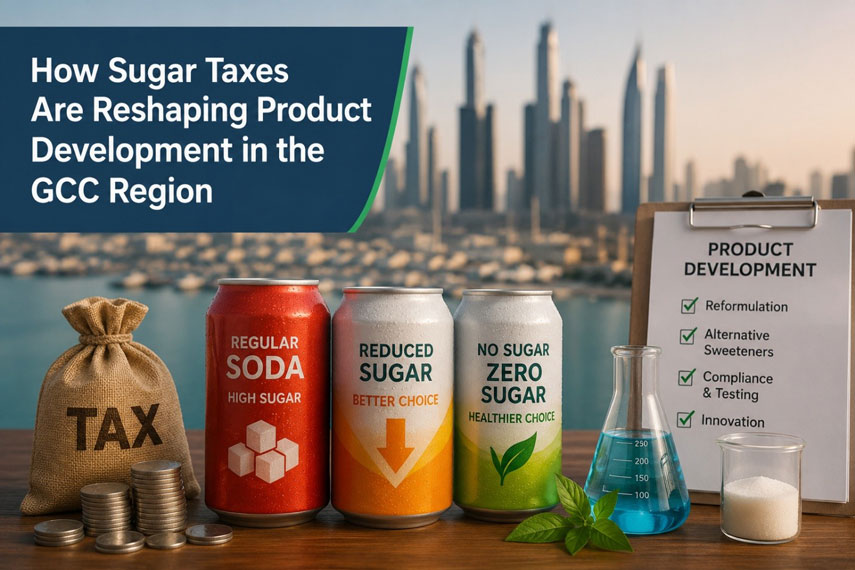
How Sugar Taxes Are Reshaping Product Development in the GCC Region
Sugar taxes have evolved beyond public health policy and now play a significant role in how food and beverage companies across the Gulf Cooperation Council (GCC) develop, reformulate, and market their products. As governments increasingly link excise tax rates to sugar content, product formulation has become a strategic consideration that extends beyond nutritional objectives to include regulatory compliance and product positioning.
Several GCC countries are revising their excise tax policies on sugar-sweetened beverages (SSBs), although tax structures, implementation timelines, product classifications, and regulatory requirements differ across jurisdictions. While some countries have implemented sugar-content-based taxation and others have announced or are considering similar measures, these developments indicate partial regulatory convergence rather than a fully harmonized regional framework. Consequently, regulatory requirements should be interpreted within the legal and policy context of each GCC country rather than as a single regional regulatory system.
These evolving regulatory policies are intended to encourage reductions in sugar consumption by creating incentives for product reformulation and the use of alternative sweetening strategies. However, the extent of reformulation is likely to depend on formulation feasibility, consumer acceptance, market conditions, and country-specific regulatory requirements. Therefore, sugar taxation should be regarded as one of several factors influencing product development rather than the sole driver of industry behavior.
The evolving regulatory landscape also influences product development beyond pricing decisions. Manufacturers may need to review existing formulations, verify sugar content through laboratory testing, classify products according to national tax frameworks, and comply with updated registration and labeling requirements.
Growing consumer demand for healthier beverages has been reported in several GCC markets (1–3). At the same time, adapting products to changing regulatory requirements may improve regulatory readiness and facilitate compliance. Whether early adaptation also improves market competitiveness, however, is likely to depend on consumer acceptance, market dynamics, and the regulatory environment within individual GCC countries.
This article provides a narrative review of emerging sugar-tax policies across selected GCC countries and examines their potential implications for beverage reformulation, alternative sweetener selection, product innovation, and regulatory compliance. Rather than comparing national tax systems quantitatively, the article provides an evidence-based overview of current regulatory developments and discusses their potential influence on product development strategies within the GCC food and beverage industry.
1. Sugar Taxes Across the GCC
Sugar tax policies have been introduced across the GCC as part of broader public health strategies to reduce obesity, diabetes, and other non-communicable diseases. Although these policies share similar public health objectives, their implementation timelines, tax structures, and regulatory requirements differ across jurisdictions.
Implementation of Sugar Taxes in GCC Countries
Saudi Arabia became the first GCC country to implement excise taxation on selected beverages in 2017. Under the national Excise Tax Implementing Regulations, soft drinks are subject to a 50% excise tax, while energy drinks are subject to a 100% excise tax, based on the applicable excise tax provisions and product classifications established by the Zakat, Tax and Customs Authority (ZATCA) (4,5).
The United Arab Emirates is now transitioning to a four-tier taxation system based on sugar content, scheduled to take effect in 2026 (6). Bahrain and Oman have implemented excise taxes on selected beverage categories (15, 16), while Qatar has announced the implementation of an excise tax mechanism for sweetened beverages (17).
Although tax structures differ between GCC countries, several jurisdictions are placing greater emphasis on sugar-content-based taxation rather than fixed excise rates. These developments indicate partial regulatory convergence rather than a fully harmonized regional framework. Consequently, manufacturers should interpret regulatory requirements within the context of each country’s regulatory framework, despite increasingly similar policy objectives across the region.
2. Key Objectives of Sugar Tax Regulations
Sugar tax policies pursue several interconnected public health and economic objectives (7,8,13):
Reducing obesity and diabetes: The GCC has one of the world’s highest burdens of obesity and diabetes. Lowering sugar consumption is considered an important strategy for reducing the risk of these conditions.
Encouraging product reformulation: Sugar-content-based tax rates incentivize manufacturers to reduce added sugars and develop healthier products.
Supporting fiscal diversification: Excise taxes increase government revenue and fund public health initiatives.
Protecting children’s health: Lowering children’s sugar intake can reduce the long-term risks of obesity, dental caries, and metabolic diseases.
Aligning with international recommendations: These policies are consistent with WHO recommendations that encourage fiscal measures to promote healthier dietary patterns.
3. Impact on Product Development
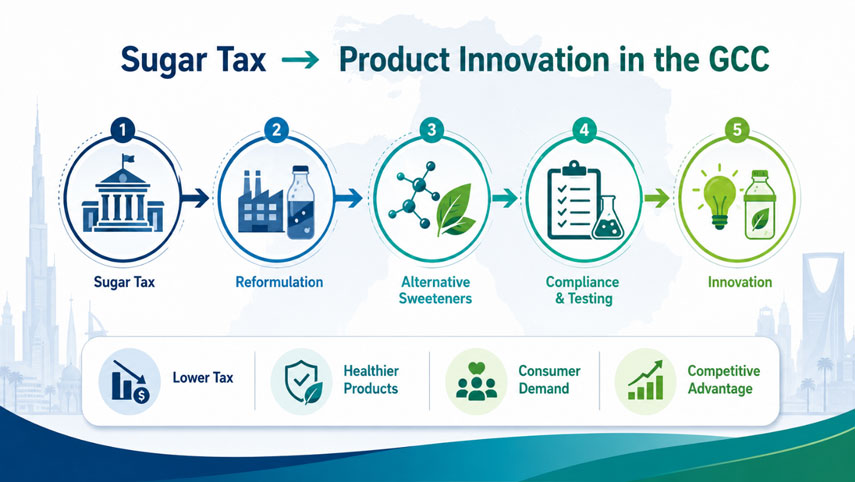
Sugar-content-based taxation is reshaping food and beverage product development across the GCC. Today, developers must evaluate sugar concentration not only for nutritional reasons but also because it directly affects taxation, pricing, and market competitiveness.
Reformulating Products to Reduce Sugar
Reducing sugar has become a strategic priority for many food and beverage manufacturers. Reformulating products allows companies to qualify for lower tax tiers while meeting the growing consumer demand for healthier beverage options.
Successful reformulation involves much more than simply lowering sugar content. Manufacturers must preserve taste, texture, mouthfeel, and product stability while ensuring regulatory compliance throughout the development process.
To minimize delays and compliance risks, many companies now integrate laboratory testing, sugar-content verification, product classification, and regulatory documentation during the early stages of product development. At the same time, manufacturers are reviewing existing product portfolios to identify beverages with the greatest potential for reformulation and tax optimization (1,13,14).
Growing Use of Alternative Sweeteners
Sugar-content-based taxation is accelerating the adoption of approved low- and no-calorie sweeteners throughout the GCC. Replacing added sugar with alternative sweeteners may help manufacturers reduce tax exposure while supporting sugar-reduction strategies. However, maintaining product quality and consumer acceptance depends on careful formulation design, as sweetener substitution may influence sweetness profile, aftertaste, mouthfeel, and product stability. Therefore, reformulated products should be validated through sensory evaluation, stability testing, and assessment of compliance with applicable regulatory requirements.
The shift toward sugar reduction is also driving broader product innovation. Instead of making only incremental changes to existing products, companies are developing sugar-free beverages, flavored waters, functional drinks, and other health-oriented products that better align with changing market demands. As product development becomes increasingly regulated, laboratory validation, product certification, and sugar-content verification are being incorporated into the earliest stages of innovation. This proactive approach may help reduce compliance risks while supporting more efficient product development and market introduction (1,11).
4. Challenges and Opportunities for Manufacturers
Although sugar-content-based taxation introduces additional regulatory and technical requirements, it also creates valuable opportunities for innovation and long-term business growth.
Companies that respond proactively may be better positioned to adapt to evolving consumer expectations and future regulatory changes.
Balancing Taste, Cost, and Compliance
One of the greatest challenges of sugar reduction is maintaining the taste and sensory experience consumers expect. Reformulation often requires extensive research, ingredient evaluation, pilot production, and sensory testing, all of which can increase development costs and extend project timelines.
Manufacturers must also comply with expanding regulatory requirements, including laboratory testing, conformity assessment, product registration, and tax classification. Integrating regulatory planning into the early stages of product development can help reduce delays and improve market access (10).
Responding to Changing Consumer Preferences
Growing health awareness is amplifying the impact of sugar tax policies across the GCC. Consumers are increasingly seeking beverages with lower sugar content, cleaner labels, and added nutritional benefits.
Evidence from Saudi Arabia suggests that excise taxes have reduced purchases of sugar-sweetened beverages while encouraging consumers to choose lower-sugar alternatives (1,12). These changing preferences create new opportunities for manufacturers to expand healthier product portfolios without compromising product appeal.
Competitive Advantages of Early Adaptation
Companies that begin reformulation before new regulations take effect may gain several competitive advantages. Lower-sugar products may qualify for reduced tax rates, provide greater pricing flexibility, and improve long-term regulatory readiness.
Early investment in reformulation, product innovation, and compliance planning also enables manufacturers to respond more quickly to market changes and strengthen their position within the increasingly health-conscious GCC food and beverage industry.
5. The Future of Product Innovation in the GCC
As sugar-content-based excise taxes become more widely adopted across the GCC, product innovation is shifting from a competitive advantage to a business necessity. Manufacturers are moving beyond simple sugar reduction to rethink product portfolios, ingredient selection, and innovation strategies that meet both regulatory requirements and changing consumer expectations.
Emerging Trends in Sugar Reduction
Sugar reduction strategies are becoming increasingly sophisticated. Rather than making small adjustments to existing products, many companies are introducing entirely new categories, including sugar-free beverages, flavored waters, functional drinks, and naturally sweetened alternatives.
Manufacturers are also investing in research and development to identify sweetening solutions that preserve taste, texture, and shelf life while reducing sugar content. Government initiatives across the GCC continue to support these efforts by promoting healthier food environments and encouraging product reformulation as part of broader public health strategies (1,3,7,14).
The Growing Role of Clean-Label and Functional Ingredients
Consumer preferences are increasingly shaping beverage innovation across several GCC markets, though the trend varies by country and product category. Market evidence suggests interest in beverages with reduced sugar, clean-label formulations, and added nutritional or functional benefits. In response, manufacturers are exploring plant-based ingredients, natural sweeteners, vitamins, minerals, and other functional components to diversify product portfolios and support healthier positioning. Clearer nutrition labeling and greater ingredient transparency may also improve consumer confidence and support informed purchasing decisions. As regulatory requirements and market expectations evolve, successful product development is likely to depend on balancing scientific evidence, consumer acceptance, and country-specific regulatory compliance (1,3, 7,14).
6. Strategic Implications for Food and Beverage Manufacturers
Sugar-content-based taxation is transforming product development throughout the GCC food and beverage industry. These regulatory developments may encourage manufacturers to accelerate innovation, diversify product portfolios, and respond to evolving consumer preferences.
Potential adaptation strategies include reformulating high-sugar products, investing in alternative sweeteners and clean-label ingredients, and integrating regulatory planning into product development from the earliest stages.
Achieving the right balance between sugar reduction, product quality, and consumer acceptance remains essential, as taste continues to be one of the strongest drivers of purchasing decisions.
Integrating regulatory planning with continuous product innovation may improve development efficiency and support regulatory preparedness. However, the extent to which these strategies translate into operational or commercial benefits is likely to depend on product characteristics, market conditions, and consumer acceptance within individual GCC markets (1,7,11).
Conclusion
Sugar-content-based excise taxes are becoming an increasingly important component of public health policy across several GCC countries. Current evidence suggests that these measures may influence beverage reformulation, sweetener selection, and regulatory planning, although policy implementation and regulatory frameworks continue to differ between jurisdictions.
This review summarizes the emerging sugar-tax landscape in selected GCC countries and examines its potential implications for beverage reformulation and compliance strategies. While available evidence indicates that sugar taxation may encourage product reformulation, the extent of its impact is likely to vary according to national regulations, technological capabilities, market conditions, and consumer acceptance.
Further country-specific research will be important to evaluate the long-term effects of sugar-content-based taxation on reformulation practices, product innovation, consumer behavior, and public health outcomes across the GCC.
Frequently Asked Questions
1. Which GCC countries have introduced sugar taxes?
Several GCC countries have implemented or announced sugar tax policies, although the regulatory frameworks and implementation timelines differ by country.
2. Do sugar taxes affect all beverages?
No. Tax applicability depends on each country’s regulations and product classification criteria.
3. Can companies avoid sugar taxes through reformulation?
Reducing sugar content may lower tax exposure in some jurisdictions, but eligibility depends on national tax rules and sugar thresholds.
4. Why is sugar reformulation technically challenging?
Because sugar affects taste, texture, stability, and overall product quality in addition to sweetness.
5. What should manufacturers do before new regulations take effect?
They should review product formulations, verify sugar content, and assess compliance with the applicable regulatory requirements.
References:
1. Alhareky M, Bedi S, AlMulhim A, El Tantawi M, Farooqi FA, AlHumaid J. Impact of sugar tax on sugar-sweetened beverage consumption among Saudi schoolchildren. Oral Health Prev Dent. 2021;19:189-194. doi:10.3290/j.ohpd.b1075081.
2. Ministry of Finance, United Arab Emirates. Ministry of Finance announces new amendments to the excise tax for the tiered volumetric model on sweetened beverages [Internet]. Abu Dhabi: Ministry of Finance; 2025 [cited 2026 Jul 18]. Available from: https://mof.gov.ae/en/news/ministry-of-finance-announces-new-amendments-to-the-excise-tax-for-the-tiered-volumetric-model-on-sweetened-beverages/
3. Forde H, Penney TL, White M, Adams J. Is reformulation still a suitable goal for sugary beverage taxes? A response to recent commentaries. Int J Health Policy Manag. 2023;12:8366. doi:10.34172/ijhpm.2023.8366.
4. Zakat, Tax and Customs Authority. Excise Tax Implementing Regulations [Internet]. Riyadh: Zakat, Tax and Customs Authority [cited 2026 Jul 18]. Available from: https://zatca.gov.sa/en/RulesRegulations/Documents/Excise%20Tax%20Implementing%20Regulations.pdf
5. Zakat, Tax and Customs Authority. Selective Excise Tax Guide [Internet]. Riyadh: Zakat, Tax and Customs Authority; 2023 [cited 2026 Jul 18]. Available from: https://zatca.gov.sa/en/HelpCenter/guidelines/Documents/Selective%20Excise%20Tax%20Eng.pdf
6. Ministry of Finance, United Arab Emirates. UAE to introduce new sugar tax tiers in 2026 [Internet]. Abu Dhabi: Ministry of Finance; 2023 [cited 2026 Jul 18]. Available from: https://www.mof.gov.ae
7. World Health Organization. Regional expert meeting on policy action for healthy diets, with a focus on the Gulf Cooperation Council countries. East Mediterr Health J. 2023;29(12):995-997.
8. Megally R, Al-Jawaldeh A. Impact of sin taxes on consumption volumes of sweetened beverages and soft drinks in Saudi Arabia. F1000Research. 2020;9:1117. doi:10.12688/f1000research.25853.2.
9. Andreyeva T, Marple K, Marinello S, Moore TE, Powell LM. Outcomes following taxation of sugar-sweetened beverages: a systematic review and meta-analysis. JAMA Netw Open. 2022;5(6):e2215276. doi:10.1001/jamanetworkopen.2022.15276.
10. Ramsey I, Liu J, Swiegers JH, Oladokun O. From sweetness to mouthfeel: a review on overcoming sensory barriers in sugar-free beverages. Int J Food Sci. 2025;2025:2345722. doi:10.1155/2025/2345722.
11. Al-Jawaldeh A, Megally R. Impact evaluation of soft drink taxes as part of nutrition policies in Gulf Cooperation Council countries: Bahrain, Kuwait, Oman, Qatar, Saudi Arabia and United Arab Emirates. F1000Research. 2021;10:240. doi:10.12688/f1000research.27097.2.
12. Alsukait R, Wilde P, Bleich S, Singh G, Folta S. Impact of Saudi Arabia’s sugary drink tax on prices and purchases (P10-066-19). Curr Dev Nutr. 2019;3(Suppl 1):P10-066-19. doi:10.1093/cdn/nzz034.P10-066-19.
13. Al-Jawaldeh A, Hammerich A, Doggui R, Engesveen K, Lang K, McColl K. Implementation of WHO recommended policies and interventions on healthy diet in the countries of the Eastern Mediterranean Region: from policy to action. Nutrients. 2020;12(12):3700. doi:10.3390/nu12123700.
14. Al-Jawaldeh A, Taktouk M, Naalbandian S, Aguenaou H, Al Hamad N, Almamary S, Al-Tamimi HA, Alyafei SA, Barham R, Hoteit M, Hussain M, Massad H, Nasreddine L. Sugar reduction initiatives in the Eastern Mediterranean Region: a systematic review. Nutrients. 2023;15(1):55. doi:10.3390/nu15010055.
15. National Bureau for Revenue. Excise Tax Guide [Internet]. Manama: National Bureau for Revenue; 2022 [cited 2026 Jul 18]. Available from: https://www.nbr.gov.bh
16. Oman Tax Authority. Excise Tax on Select Beverages [Internet]. Muscat: Oman Tax Authority; 2022 [cited 2026 Jul 18]. Available from: https://tatax.gov.om
17. Ministry of Finance, Qatar. Excise Tax on Sweetened Beverages – Announcement [Internet]. Doha: Ministry of Finance; 2023 [cited 2026 Jul 18]. Available from: https://www.mof.gov.qa