
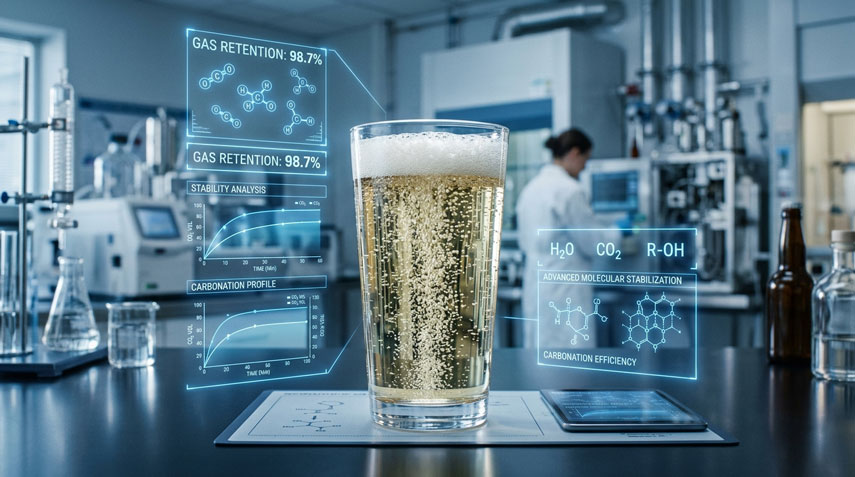
Innovations in Beverage Stability: Keeping the Sparkle Alive Through Advanced CO2 Retention Techniques
In the highly competitive beverage industry, the consumer’s first sip dictates a product’s success. Nothing ruins brand loyalty faster than a flat, lifeless carbonated drink. For R&D Managers, Beverage Formulators, and Production Managers, maintaining that perfect, effervescent “bite” throughout the product’s entire lifecycle is an ongoing battle against physics and time. As packaging shifts toward sustainable but highly permeable materials like lightweight PET, the industry faces an escalating challenge: how to lock carbon dioxide (CO2) within the liquid matrix from the bottling line to the consumer’s palate.
Addressing this challenge requires moving beyond traditional over-carbonation methods. Today, industry leaders are leveraging Advanced CO2 Retention Techniques to revolutionize shelf-life stability and organoleptic properties. By addressing the molecular dynamics of dissolved gases, modern stabilization technologies allow manufacturers to deliver a consistently premium sensory experience.
Key Takeaways
- The Flatness Epidemic: Traditional PET packaging and fluctuating supply chain temperatures rapidly degrade beverage carbonation.
- Scientific Interventions: Advanced CO2 Retention Techniques modify the liquid matrix to lower the kinetic energy of dissolved CO2, drastically reducing gas escape.
- The Imbevia Solution: Imbevia Carbonation Stabilizers optimize bubble nucleation and retain internal pressure without altering flavor profiles.
- Commercial ROI: Formulators can achieve significant cost savings by reducing initial CO2 overdosing while simultaneously extending the commercial shelf life of their products.
The Science of Carbonation Loss: Understanding the Problem
To appreciate the value of modern stabilization, we must first examine the thermodynamic and physical mechanisms of carbonation loss. The solubility of a gas in a liquid is governed by Henry’s Law, which states that the amount of dissolved gas is proportional to its partial pressure above the liquid.
When a beverage is sealed, the system reaches equilibrium. However, this equilibrium is fragile. Two primary factors disrupt it: packaging permeability and nucleation dynamics. Lightweight PET bottles, while economically and environmentally advantageous, act as semi-permeable membranes. Over time, CO2 molecules migrate through the polymer matrix and escape into the atmosphere. This process is aggressively accelerated by thermal fluctuations during transit and storage; as temperature rises, the kinetic energy of the CO2 molecules increases, decreasing solubility and forcing more CO2 into the headspace, driving faster permeation through the plastic.
Furthermore, once a beverage is opened, the sudden drop in pressure causes an immediate shift in equilibrium. Imperfections in the packaging, particulate matter in the liquid, and the surface tension of the beverage itself serve as nucleation sites. These sites act as catalysts for CO2 bubbles to form, grow, and rapidly escape. Formulators have historically attempted to combat this by over-dosing CO2 during production, a costly, inefficient practice that often results in excessive foaming on the filling line and a harsh, acidic bite that masks delicate flavor notes. Overcoming this requires sophisticated Advanced CO2 Retention Techniques that address the problem at the molecular level rather than merely increasing pressure.
The Solution: Imbevia Carbonation Stabilizer Technology
Enter the Imbevia Carbonation Stabilizer—a state-of-the-art solution designed specifically for modern beverage manufacturing. Rather than relying on brute-force pressurization, Imbevia utilizes specialized hydrocolloid and surfactant interactions to fundamentally alter how CO2 interacts with the liquid matrix.

How Imbevia Works at the Molecular Level
Imbevia’s technology is built on the principles of interfacial science. When incorporated into a beverage formulation, the Imbevia Carbonation Stabilizer subtly modifies the liquid’s surface tension and increases the microscopic viscosity around the dissolved CO2 molecules. This creates a protective, nano-scale matrix that essentially “traps” the CO2 within the aqueous environment.
By implementing these Advanced CO2 Retention Techniques, Imbevia significantly reduces the rate of bubble coalescence (the process where small bubbles merge into larger, faster-escaping bubbles). Instead of large, aggressive bubbles that rapidly deplete the beverage’s carbonation upon opening, the stabilizer promotes the formation of uniform, micro-fine bubbles. This micro-emulsion-like stability means that even when the product is subjected to temperature variations in the supply chain, the CO2 remains locked in the liquid phase far longer than in untreated beverages.
Crucially, the Imbevia Carbonation Stabilizer achieves this physical manipulation without negatively impacting the organoleptic properties of the drink. It is completely flavorless, odorless, and highly soluble, ensuring that the carefully crafted flavor profile of your formulation remains pristine and unaltered.
Commercial and Sensory Benefits: Maximizing ROI
Adopting the Imbevia Carbonation Stabilizer provides compounding benefits that extend from the production line directly to the consumer’s taste buds, resulting in a measurable Return on Investment (ROI).
Elevated Organoleptic Experience and “Mouthfeel”
The size and distribution of CO2 bubbles profoundly impact a beverage’s mouthfeel. Large, uncontrolled bubbles yield a sharp, aggressive, and short-lived “fizz” sensation. Imbevia’s technology generates a dense, velvety effervescence. These smaller bubbles caress the palate, enhancing the perception of premium quality—a critical differentiator in high-end craft sodas, sparkling waters, and Ready-to-Drink (RTD) cocktails. The sustained carbonation means that even thirty minutes after opening, the beverage retains its lively, refreshing sparkle.
Extended Visual and Physical Shelf Life
By drastically slowing the permeation of CO2 through PET packaging, Imbevia extends the commercial shelf life of carbonated beverages. This minimizes write-offs related to “flat” product returns and protects brand integrity. Consumers who purchase a beverage nearing its expiration date will still experience the vibrant carbonation the formulator intended.
Production Efficiency and Sustainability
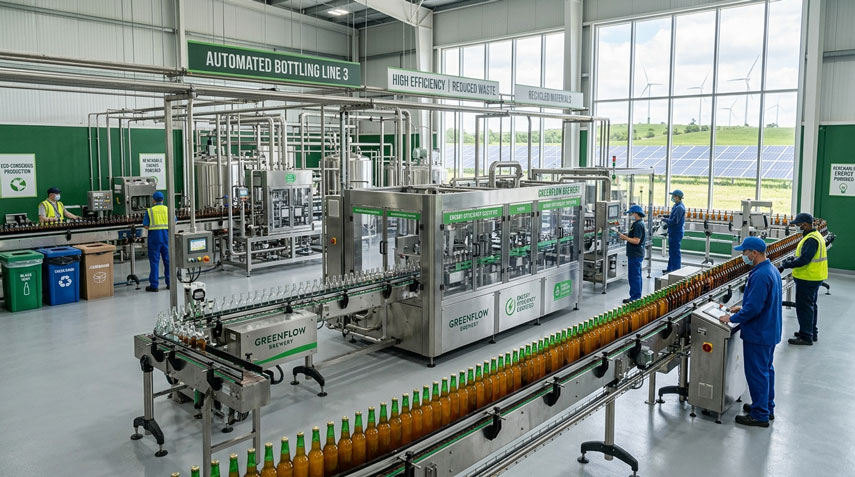
Traditional over-carbonation is expensive and environmentally taxing. Because Imbevia’s Advanced CO2 Retention Techniques are so efficient at holding CO2 within the liquid, production managers can significantly reduce the volume of CO2 dosed during manufacturing. This reduction in raw material usage translates to immediate cost savings. Furthermore, lowering carbonation pressures mitigates foaming issues on the filling line, allowing for faster line speeds, reduced product waste, and improved overall operational equipment effectiveness (OEE).
Application and Technical Considerations
Integrating Imbevia into existing manufacturing processes is designed to be seamless for Beverage Formulators and Production Managers.
- Ease of Use: The Imbevia Carbonation Stabilizer is formulated as a highly soluble liquid or fast-hydrating powder, allowing for direct addition into the beverage syrup or inline dosing systems. It requires no specialized high-shear mixing equipment.
- Dosage: Effective at incredibly low usage rates (typically measured in parts per million, or ppm), it is a highly economical addition to the bill of materials. The specific dosage can be tailored based on the desired carbonation volume and packaging format.
- Broad Compatibility: Imbevia is exceptionally stable across a wide pH range, making it suitable for a diverse portfolio of products. Whether you are formulating highly acidic energy drinks, delicately balanced carbonated juices, traditional Carbonated Soft Drinks (CSDs), or alcoholic RTD seltzers, the technology remains robust and effective.
Conclusion
In a market where consumer expectations are higher than ever, settling for rapid carbonation loss is a compromise your brand cannot afford. Traditional methods of fighting flat beverages are inefficient, costly, and ultimately fail to protect the product through its entire lifecycle. By implementing Advanced CO2 Retention Techniques, beverage manufacturers can scientifically secure their product’s quality from the filling line to the final sip.
Imbevia Carbonation Stabilizers offer an elegant, cost-effective, and highly functional solution to elevate your formulations, improve production efficiency, and protect your brand’s sparkling reputation.
Ready to revolutionize your beverage stability? Discover how Imbevia can transform your formulations. Visit imbevia.com today to request a technical consultation or order a sample for your R&D lab.
Frequently Asked Questions (FAQ)
How do carbonation stabilizers improve PET bottle shelf life?
PET bottles are naturally semi-permeable, allowing CO2 to escape over time. Carbonation stabilizers alter the micro-viscosity and surface tension of the liquid matrix. By holding the CO2 more tightly within the aqueous phase, the partial pressure against the plastic packaging is reduced, significantly slowing the rate of CO2 permeation and extending the product’s carbonated shelf life.
Can carbonation stabilizers be used in low-sugar and diet formulations?
Absolutely. In fact, diet and zero-sugar beverages often struggle more with carbonation retention because they lack the natural density and molecular binding properties provided by high fructose corn syrup or sucrose. Using Advanced CO2 Retention Techniques via Imbevia stabilizers is highly recommended for diet formulations to restore mouthfeel and maintain prolonged effervescence.
What is the impact of CO2 retention on a beverage’s sensory profile?
Rather than altering flavor, CO2 retention technologies enhance the sensory profile by modifying the physical mouthfeel. They promote the formation of finer, more consistent bubbles, resulting in a smoother, more premium “fizz” sensation. By preventing rapid CO2 scape, the acidic bite remains balanced, allowing volatile aromatic compounds to be released steadily for a superior tasting experience.